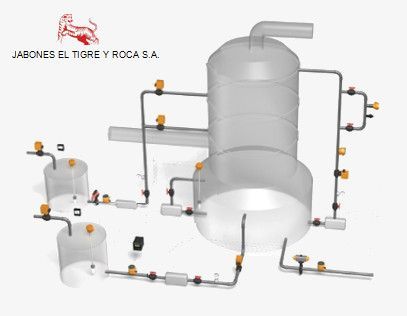
 This document presents the information required by the Colombian environmental regulator as a requirement for a production system that has to do with the thermal treatment of animal by-products, specifically the tallow used for the production of solid soap of the company JABONES EL TIGRE Y LA ROCA S.A.
For the elaboration of the study, an evaluative research methodology has been used with the purpose of evaluating the effectiveness of the system of control of atmospheric emissions by absorption in water with the scrubber of the company. Initially, the obligations imposed by the national authorities are identified through the regulations defined by the Ministry of the Environment and Sustainable Development.
J.E. Rincón1*, B.I. Delgado2, E.G. Pinilla3
1. Student Chemistry. Last term, University of Francisco José de Caldas.
2. Plant chemical engineer, MsC Chemistry, University of Francisco José de Caldas.
3. General Manager, Jabones El Tigre y Roca S.A.
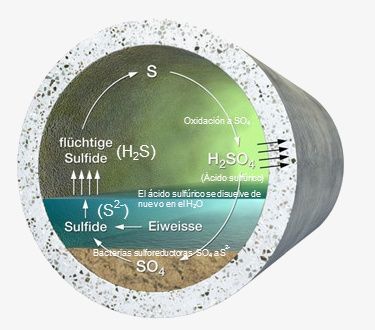 Sewervac new mathematical modeling tool for the sulfur ion allows to model the routes of the sulfide ion to identify at which points we will have the highest sulfide’s concentrations and consequently hydrogen sulphide (H2S), the conversion rates of sulfur to hydrogen sulphide, the origin of the hydrogen sulphide peaks and what it can be done to avoid it.
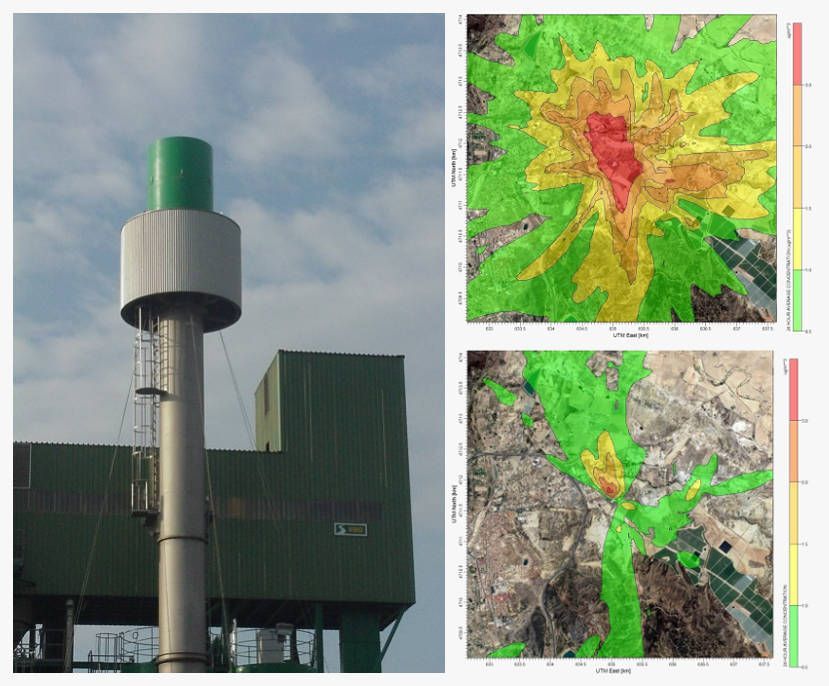 For the industrial sector, in many occasions it is the directed sources that are the main route of emission of pollutants into the atmosphere. In these cases, the technical recommendations for minimizing the impact of industrial emissions on the environment indicate the chanelling of these emissions for dispersion at some height as a first step towards establishing possible corrective measures.