There is no translation available.
Nowadays, we recognise the link between the growing frequency of illnesses such as asthma, allergies and cancers, and the effects of exposure to chemical pollutants in the air that we breathe indoors. Considering these negative effects, indoor air quality (IAQ) is a public health issue that also determines, to a large extent, occupant health, comfort and productivity and, therefore requires special attention.
Currently, technologies used to treat this kind of pollution have been judged and are not considered fully satisfactory for achieving cleaner indoor air. Accordingly, the main objective of the present study is to treat a micro-polluted air with seven VOCs recognised as important contributors to the deterioration of Indoor Air (IA) (butanol, butyl acetate, formaldehyde, limonene, toluene, trichloroethylene (TCE) and undecane).
C; Hort1*, V. Platel1, A. Luengas1, M. Ondarts2, S. Sochard1
1 Thermal, Energy and Process Laboratory (LaTEP), Université de Pau et des Pays de l’Adour, Quartier Bastillac, 55 Avenue d'Azereix BP 1624, 65016 Tarbes, France. * cecile.hort@univ-pau.fr
2 Laboratoire Optimisation de la Conception et Ingénierie de l’Environnement (LOCIE), Université de Savoie, Polytech Annecy-Chambéry Campus scientifique Savoie Technolac, 73376 Le Bourget du Lac, France
 In the 6th International Conference on Environmental Control Odor Monitoring -
 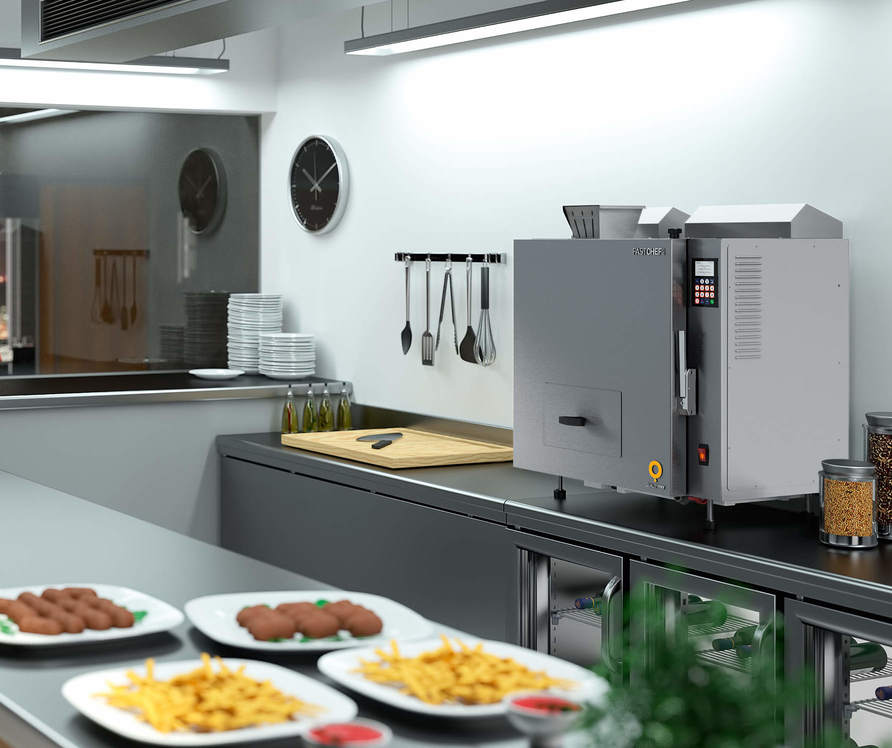 The company QualityFry has developed the first patented frier in the world that is able to tackle the odour emission from the process of deep frying. This way, there is no need of installation of stacks or ventilation systems for these processes. Deep frying is a source of odour emission, as odorants are easily carried out to the atmosphere at temperatures of 175-190 ºC. If the gases emitted during deep frying are not collected and treated adequately, they can be a source of odour complaints on communities nearby.