There is no translation available.
Nowadays, the increase of waste treatment plants based on biological treatment processes involve different kinds of gaseous emissions, from those known as Greenhouse Gases (GHG) to organic and inorganic volatile compounds. The latter are also related to the odorous impact produced by a determined process or installation.
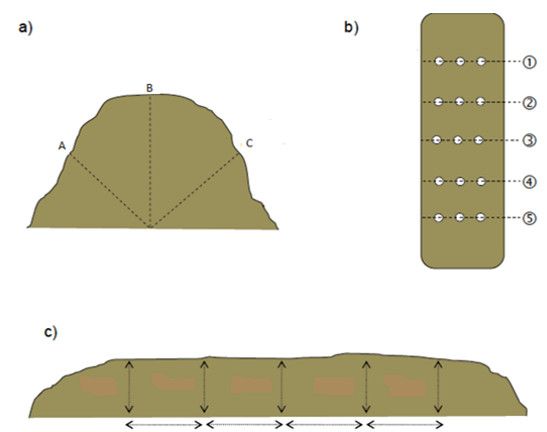
The present work is part of a project in which different types of waste treatment plants, either solid wastes or urban wastewater, are evaluated with the aim of relating their characteristic gaseous emissions –total volatile organic compounds (VOCs), NH3, H2S and GHG– with each kind of process.
D. González1*, J. Colón2, D. Gabriel1, A. Sánchez1
1) Universitat Autònoma de Barcelona, Departament d’Enginyeria Química, Biològica i Ambiental, 08193 Bellaterra, Barcelona (*daniel.gonzalez.ale@uab.cat).
2) Universitat de Vic – Universitat Central de Catalunya, Centre Tecnològic BETA (U Science Tech), 08500 Vic, Barcelona.

 The 4th Graz Lagrangian Model - GRAL User Workshop will be held in Innsbruck, Austria, on 12 – 13 March 2019. This recent lagrangian model is offered with a free GUI available in both Linux and Windows and has a special module focused on odour dispersion modelling. The workshop aims at giving an overview about all new developments, and it offers a distinct possibility for an informal exchange with other users and their specific experiences.This workshop is free.