There is no translation available.

Dispersion modelling is a key element of most odour assessments around the world. There are 2 or 3 well known dispersion models developed for regulatory assessments of which the most well-known are, AERMOD and CALPUFF. Because both models have been US EPA guideline models until CALPUFF was recently removed in 2017, they are routinely used in most air quality and odour assessments.
This article highlights the history and background behind CALPUFF and, the reason for its removal as a US EPA guideline model. Concerns with AERMOD for odour assessments will be presented in a separate document, Part 2.
Jennifer Barclay
Atmospheric Science Global (ASG). Auckland, New Zealand
 The 17th of December, the final draft of the revision process of the Standard EN 13725 on Dynamic Olfactometry was sent to the CEN secretariat in order to prepare the Enquiry document. The Working Group 2 of the Technical Comittee 264 of the European Committee for Standardization (CEN) had the task of reviewing the existing Standard and it looks like the final draft is ready.
 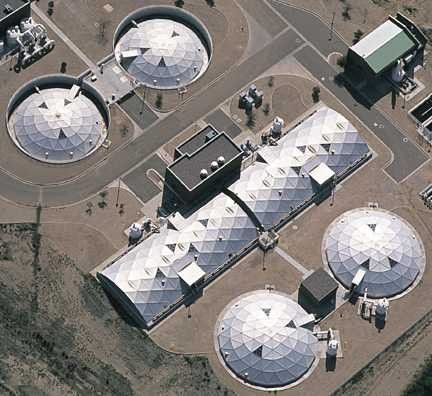 Environmental pollution related to odour emission has become in the last years an important public concern. Closeness of odour-causing facilities such as wastewater treatment plants (WWTPs) to urban areas further aggravates the problem. Volatile sulphur compounds (VSC) are one of the main groups of odour causing compounds in WWTPs, especially in the sludge processing.