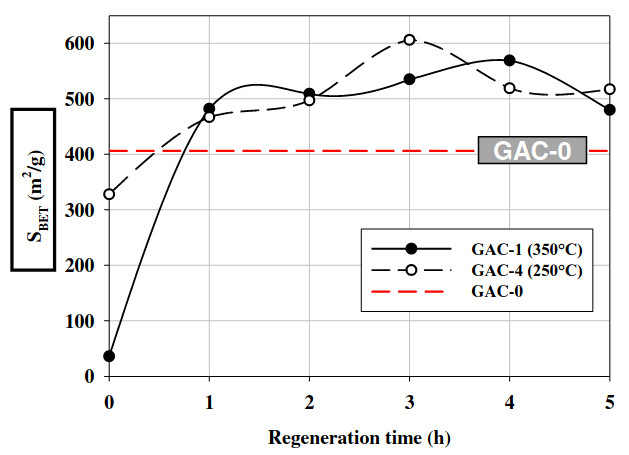
 In this work, the physico-chemical, olfactometric and textural characterization of granular activated carbon (GAC) from the odor adsorbent beds of an urban wastewater treatment plant (WWTP), as well as the chromatographic quantification of the retained odoriferous compounds, were carried out.
These techniques allowed an integral evaluation of such adsorbent material, which came from the deodorization at four stages of integral wastewater treatment (pretreatment header: GAC-1; sand and fat removal: GAC-2; sludge thickening: GAC-3; sludge dewatering: GAC-4).
 Alternative husbandry methods are playing an increasingly important role in terms of animal welfare. In order to ensure that odour pollution from freely ventilated "animal welfare-friendly" fattening pig houses can be adequately taken into account in odour surveys for approval procedures in Germany, the odour annoyance and respectively the hedonic odour effect was investigated in more detail starting from these types of houses.
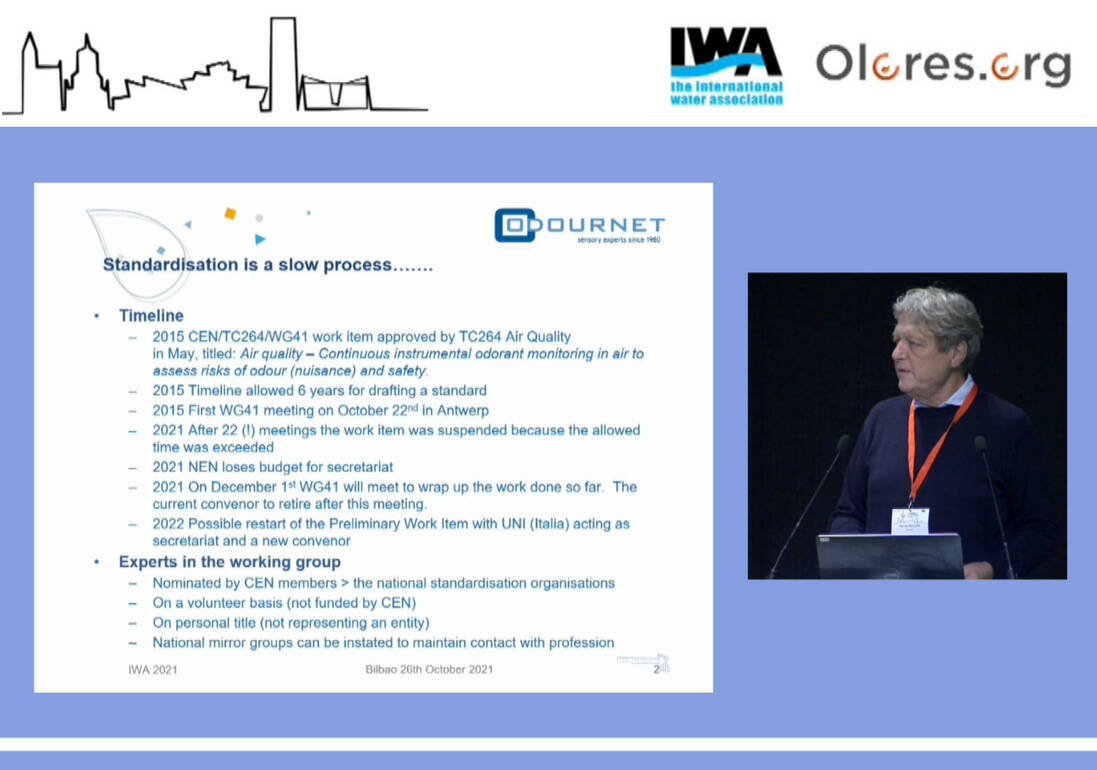 In May 2015 the decision was made, by a positive vote in Technical Committee 264 ‘Air Quality” of the Committee Européen de Normalisation (CEN), to establish a preliminary work item “Air quality – Continuous instrumental odorant monitoring in air to assess risks of odour (nuisance) and safety” which was entrusted to working group WG41 "Electronic sensors for odorant monitoring" for a period of 6 years starting on 2015-05-12. The Dutch member of CEN, NEN, was assigned the secretariat and the author of this article was appointed as convenor.