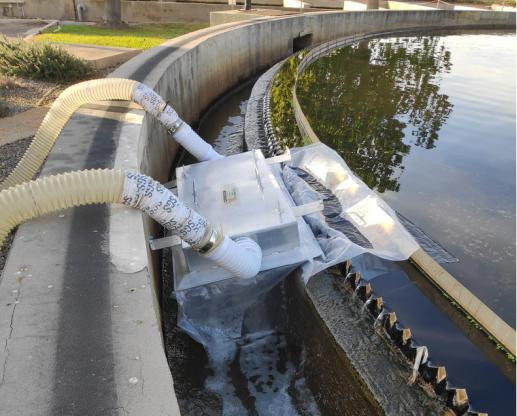
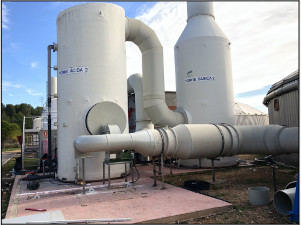
 During the last years, there is a need to plan strategical investments to reduce Wastewater Treatment Plant (WWTP) odour impact, which it is generally carried out by covering and deodourizing the main process units involved.
Odour dispersion modelling software combined to dynamic olfactometry is the standard technique conducted to evaluate the odour impact studies. However, the results obtained by this methodology strongly depend on the emission sources set in the software. Thus, this study is focused on providing a dynamic odour impact assessment using CALPUFF software simulations, calculated under different “what-if” scenarios, providing a new approach to define the calibration of the emission sources.
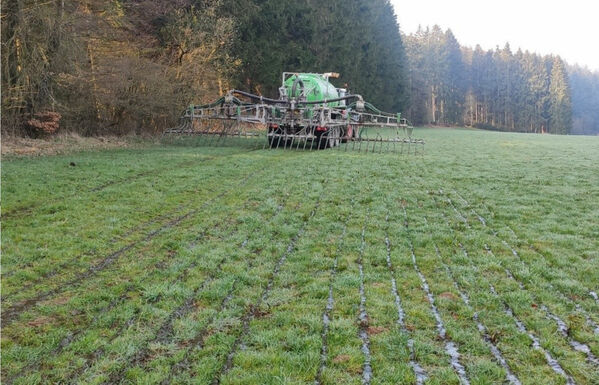 Nitrogen is used in agriculture to fertilise croplands. During the spreading of fertilisers, a substantial part of Nitrogen is lost by volatilisation of ammonia (NH3). These emissions are responsible for unpleasant odours but are also mainly precursors of particulate matters (PM). In Europe, agriculture is one of the main source of nitrogen-composed PM. There is a need to collect more emissions data to understand better this activity impact.