There is no translation available.
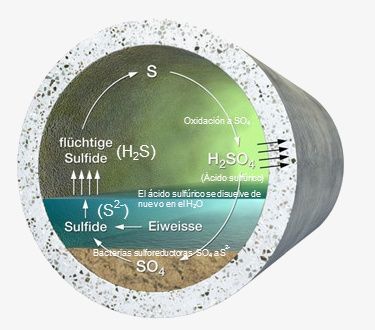 Sewervac new mathematical modeling tool for the sulfur ion allows to model the routes of the sulfide ion to identify at which points we will have the highest sulfide’s concentrations and consequently hydrogen sulphide (H2S), the conversion rates of sulfur to hydrogen sulphide, the origin of the hydrogen sulphide peaks and what it can be done to avoid it.
The continuous investment in R+D has allowed the company Sewervac to present 2.0 version, developing software that provides a much more graphic and intuitive data output.
R. Mateos, J. Chambó *
Sewervac Ibérica S.L., Carrer de Folch de Cardona 2, 46017 Valencia (Spain). Email: ricardo@sewervac; *pepe@sewervac.es
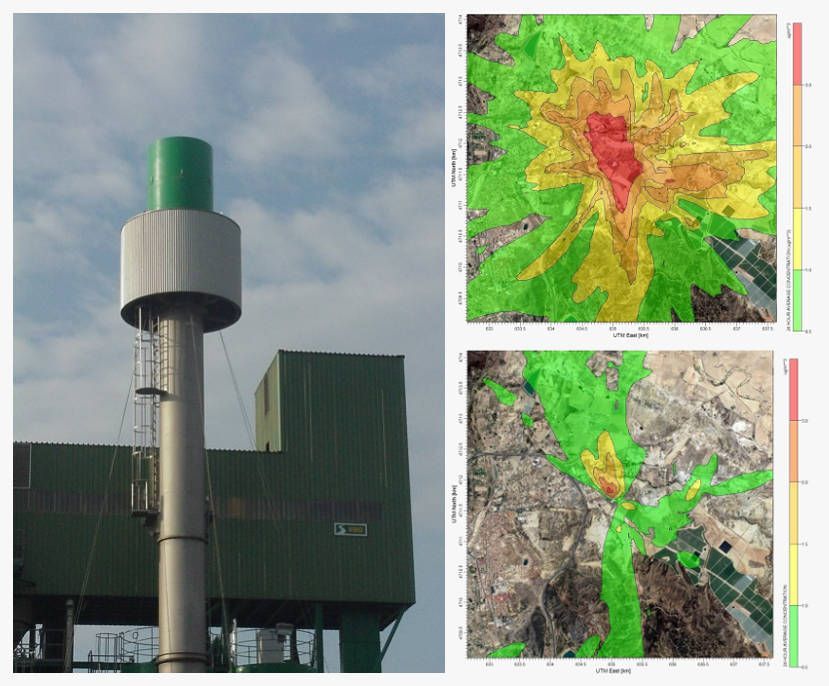 For the industrial sector, in many occasions it is the directed sources that are the main route of emission of pollutants into the atmosphere. In these cases, the technical recommendations for minimizing the impact of industrial emissions on the environment indicate the chanelling of these emissions for dispersion at some height as a first step towards establishing possible corrective measures.