There is no translation available.
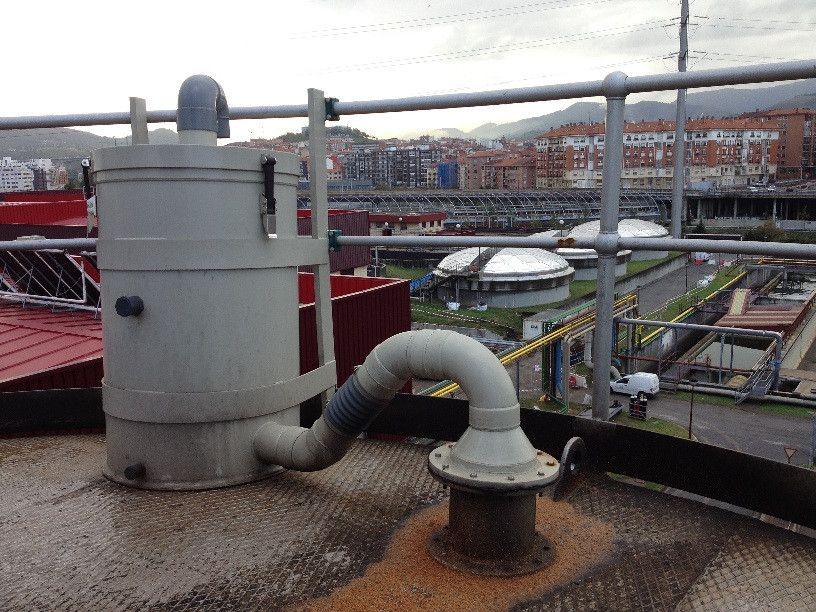 Odor control in waste water treatment plants and pumping stations is already a priority in the integration with the neighborhood. Lately the energetic and economic optimization of deodorization has become very important.
This article describes efficient solutions with very low operating costs for specific elements of plants, using small passive compact units, able to operate without fan, and loaded with selected impregnated activated alumina adsorbents. The results and capacity shown make this solution ideal in sludge silos, thickeners, septic tanks, sludge reservoirs and digesters, storm tanks and others, as opposed to the usual deodorization design criteria by a certain number of hourly renewals.
J.L. Recaj * and J.Balfagón
Alphachem S.L., C/ Jerez de los Caballeros 2, 28042 Madrid, SPAIN
* jlr@alphachem.es
 Issues with ambient odours could be annoying and exhausting for the people involved in this context. For the plant responsible of the odour emission, for the people that is exposed to environmental odours and for the authorities responsible of mantaining an adequate vital and equilibrated ambient air at work.
 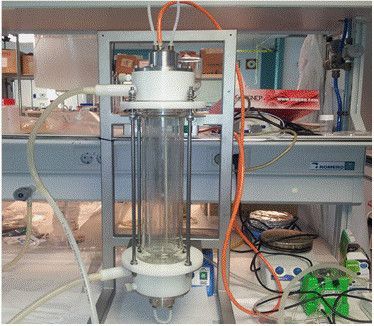 The objective of this research has been to develop advanced odor treatment techniques, from the existing conventional ones and to provide more efficient solutions in those industrial processes that by their location or characteristics need greater efficiencies.