 This work presents the tools developed by the research group of Polytechnic University of Catalonia located in Manresa and its collaborators on the study of the bioprocesses for the treatment of gaseous and odorous flows.
Among others, it can be highlighted the use of microsensors for the biofilms characterization, the simulation of bioreactors hydrodynamic behavior to achieve optimal design or the use of non-conventional configurations, such as membrane reactor, to overcome the current limitations found in traditional bioprocesses.
A.D. Dorado*, X. Guimerà, Ll. Prades, E. Morral and X. Gamisans
Universidad Politécnica de Cataluña, Av. Bases de Manresa, 61-73, 08242 Manresa (Barcelona) Spain
toni.dorado@upc.edu
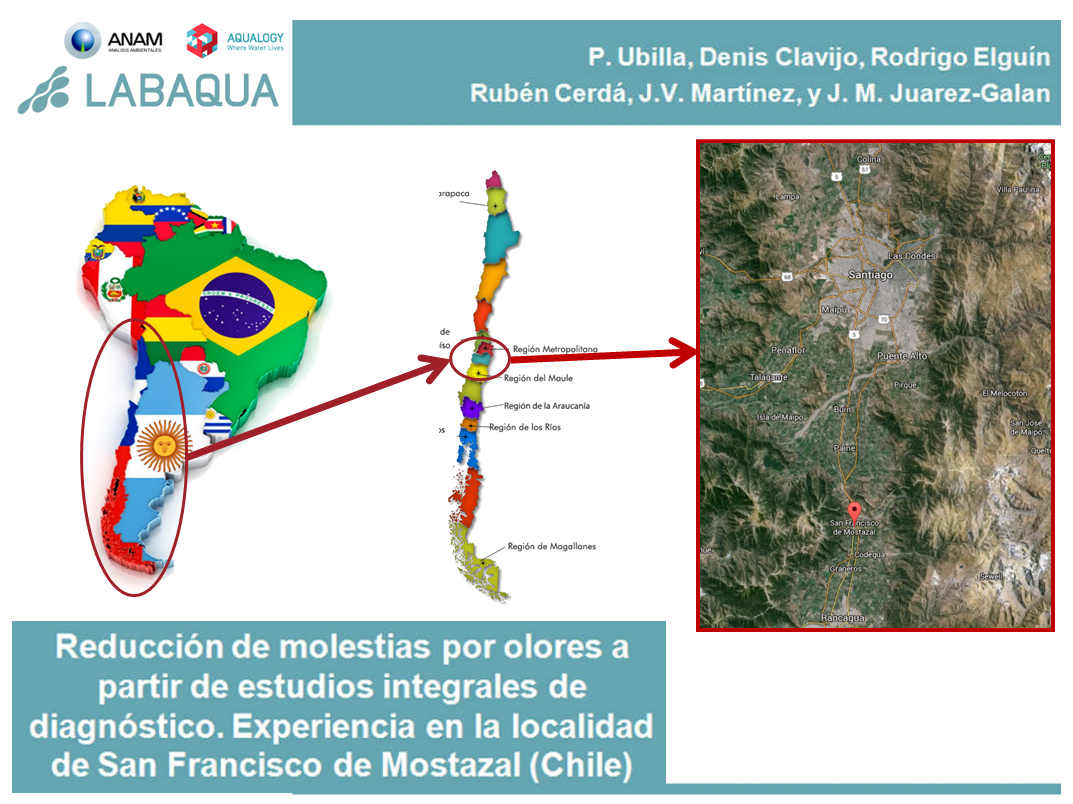 The relationship between the odors emitted by a given facility and the influence they cause on the population living in the surrounding area is very complex to determine. For these reason, a comprehensive study has been carried out at the Municipality of 'San Francisco de Mostazal', in Chile.
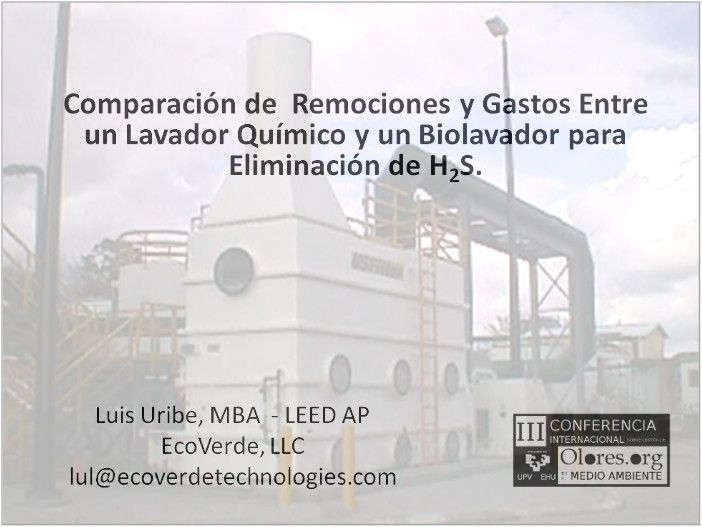 Biological odor control systems have proven to be one of the best alternatives in recent years. Their competitive advantage lies not only in its high removal efficiencies of odorous compounds, but also in their low operating and maintenance costs, compared to a chemical scrubber.