 The Interlaboratory Comparison for Olfactometry (ILC) based on EN 13725:2003 has been announced for 2016 and the company Olfasense is behind the organization. The proficiency tests allow laboratories to demonstrate compliance with its performace requirements and compare the performance of their laboratory internationally.
This proficiency test allows laboratories to demonstrate compliance with its performace requirements and compare the performance of their laboratory internationally. The participation in Proficiency Testing (PT) for laboratories accredited to ISO17025 is not facultative. In addition, it is a nice exercise to have more information about the performance of your lab.
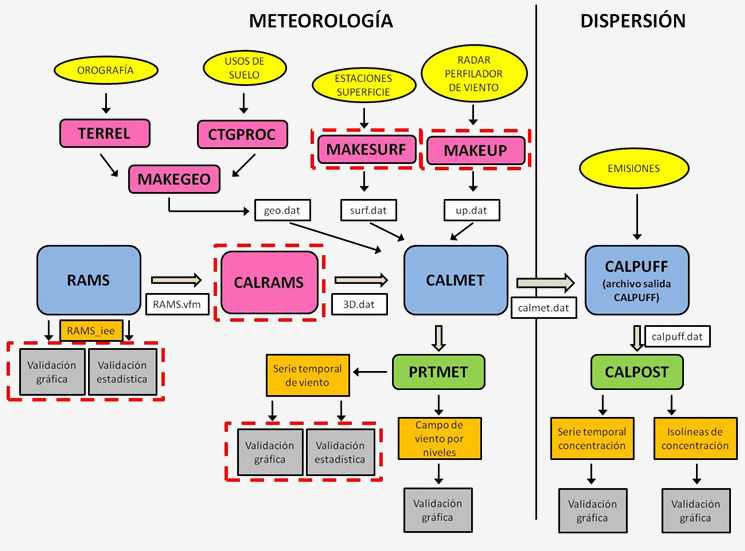 The current problems in relation to odor pollution episodes make it necessary to have methods to assess odor impacts. Such assessment can be performed using dispersion models that allow to estimate odor concentrations considering the emissions, the meteorology and the topography, among other data.
 Odour control is an increasing concern in WWTPs. Physical/chemical end-of-the-pipe technologies for odour abatement are relatively expensive and present high environmental impacts. Biotechnologies, on the other hand, have recently emerged as cost-effective and environmentally friendly alternatives but are still limited by their investment costs and land requirements. A more desirable approach to odour control is the prevention of odorant formation.