There is no translation available.
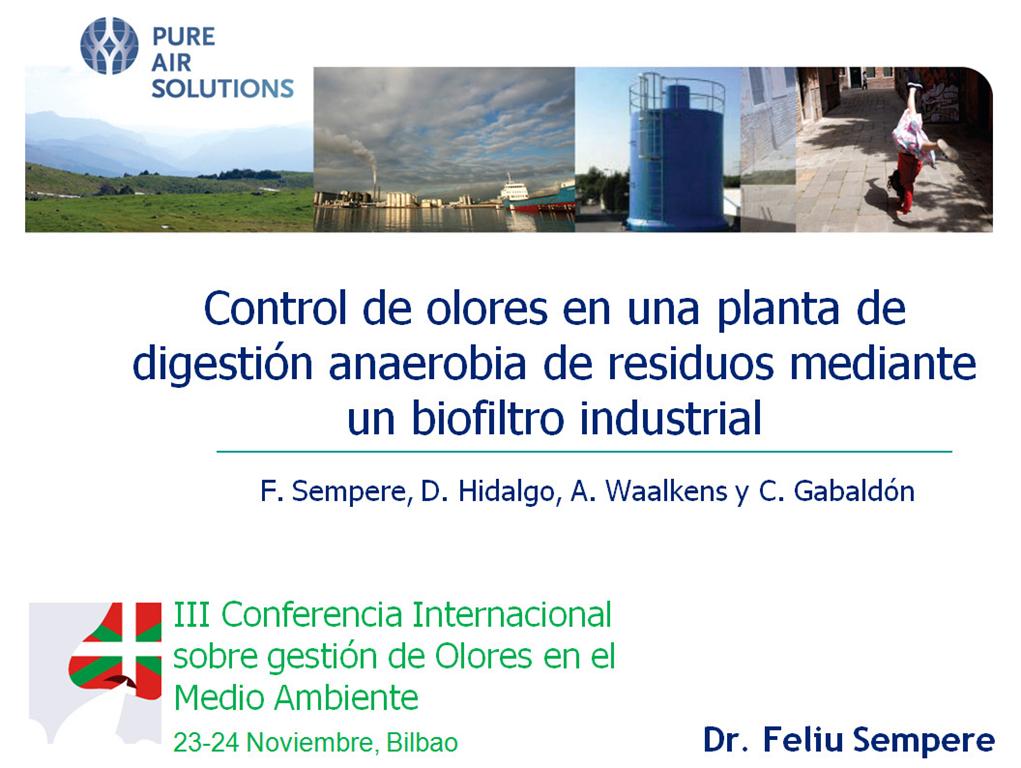 A waste facility in the United Kingdom processes food waste via anaerobic digestion. The site is in a mainly rural location with a number of isolated properties at least 500 m from the site boundary, so odour control is mandatory to protect harmful conditions to the environment and avoid odour nuisances.
The plant was commissioned using an ORGUS® double stage biofilter system with coconut fibre as packing material. The performance of the system was measured in February 2014. Olfactometric samples were undertaken, obtaining an average outlet odour concentration considerably lower than the discharge emission limit stipulated in the contract.
F. Sempere 1*, D. Hidalgo 1, A. Waalkens 1 and C. Gabaldón 2
1. Pure Air Solutions, P.O. Box 135, 8440 AC Heerenveen, The Netherlands.
2. Universitat de València, Avinguda Universitat s/n, 46100 Burjassot, Spain.
Corresponding author: f.sempere@pureairsolutions.nl
 Currently, it is usual in the operating licenses, that governmental institutions grant to the sites where the sewage and waste are treated, the measures are put in place to control the emissions into the atmosphere.
 In this paper, the possibility of faster measures for determination of chemical prints of VOCs and odours through GC-IMS technique has been evaluated.