There is no translation available.

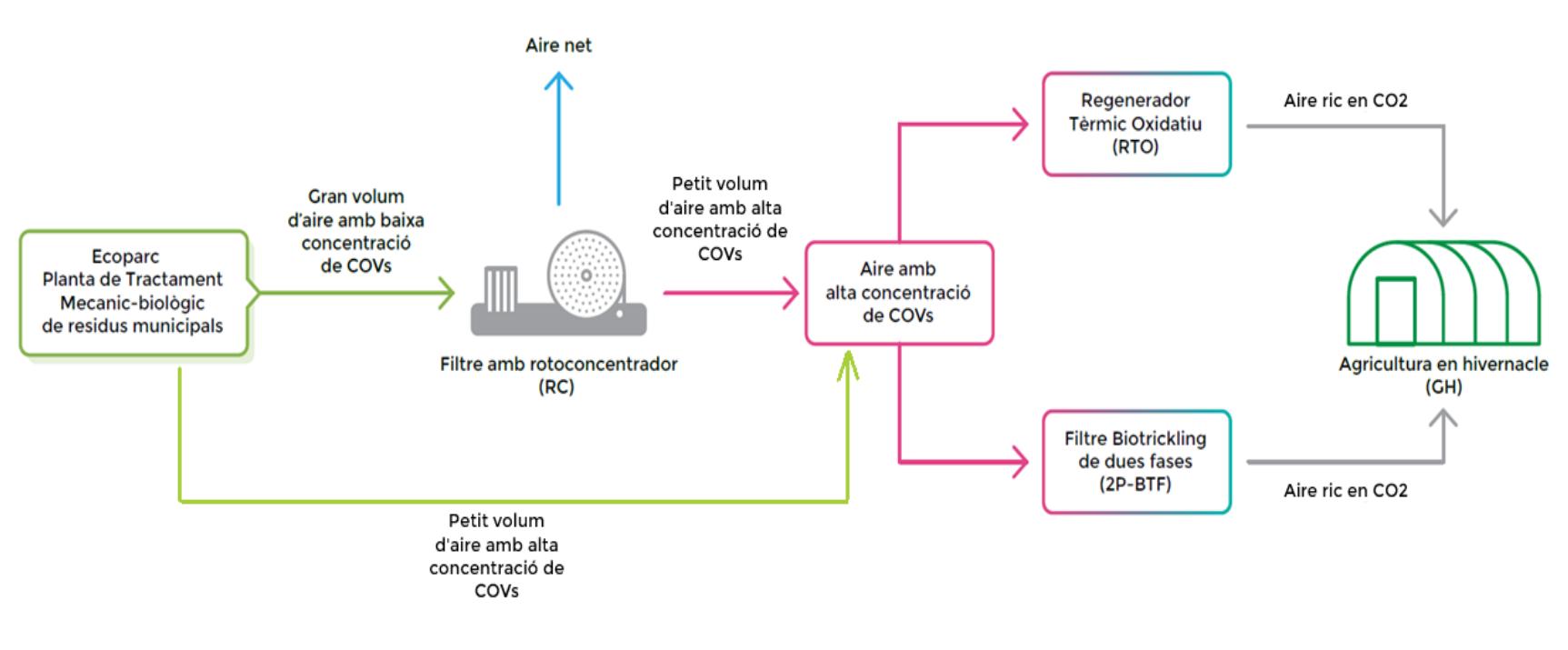
   The European project LIFE ABATE (LIFE22-ENV-ES-LIFE-ABATE/101113838) aims to significantly reduce volatile organic compound (VOC) emissions, odor impact, energy requirements (natural gas and electricity savings), and operating costs of mechanical-biological treatment (MBT) waste plants.

   The LIFE ABATE project proposes two solutions using zeolite rotary concentrators: one with thermal oxidation and another with biological treatment in biotrickling filters. CO₂ generated will be reused in greenhouses, and zeolite selection requires air characterization via TD-GC-MS.

G. Sánchez a*, J. C. Fernández a, J. Hereza a, E. Regidor b,c, R. Muñoz b,c, A. González d, M. Gil d, O. Prado e, R. Montes e, M. Macarulla f, S. Gasso f y R. Lebrero b,c

a Àrea Metropolitana de Barcelona, Barcelona, Spain
b Institute of Sustainable Processes, University of Valladolid, Spain
c Department of Chemical Engineering and Environmental Technology, University of Valladolid, Spain
d Kalfrisa Energía y Medio Ambiente, Zaragoza, Spain
e Aeris Tecnologías Ambientales S.L., Barcelona, Spain
f Research Institute for Sustainability Science and Technology, Technical University of Catalonia, Spain
g FCC Medio Ambiente, Madrid, Spain
*ssantos@amb.cat . Dirección postal: C. 62 núm. 16-18, Barcelona 08040. Phone number: +34 935069545
There is no translation available.

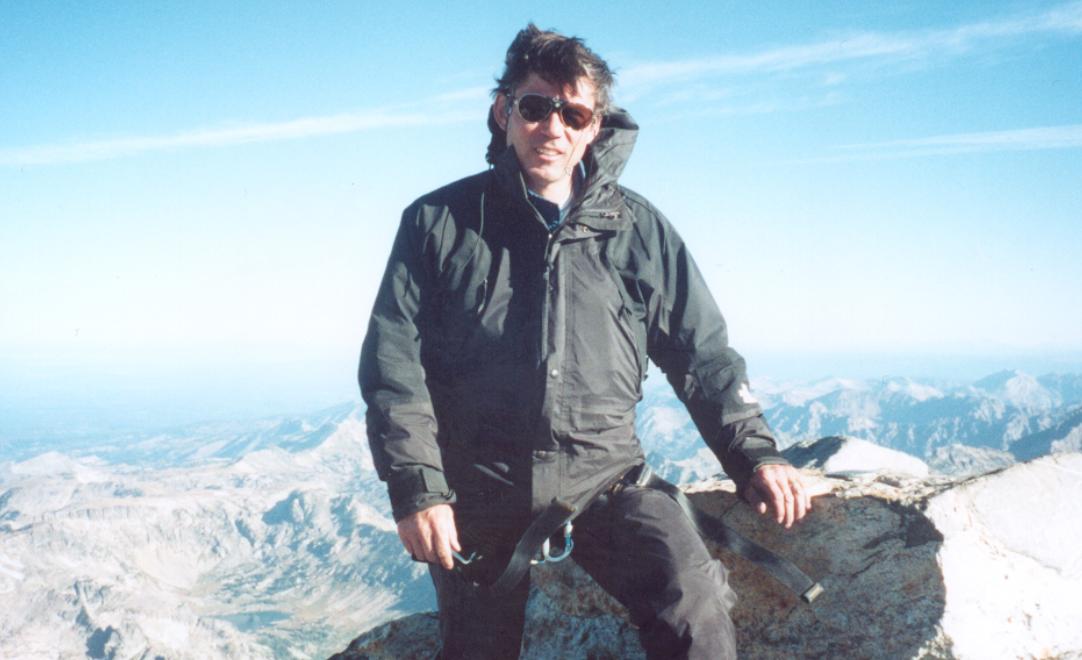
   Joe died August 16, 2024 in Windham New Hampshire, USA. Joe was the husband of Deborah and father to Sarah and Joey. Joe was born in North Andover and as a young man he excelled in baseball, football, and wrestling. Joe attended the MIT Massachusetts Institute of Technology where he earned undergraduate and graduate degrees in earth and planetary science, majoring in meteorology.

   After graduating from MIT, Joe began specializing in air pollution, in particular model development. key contributions included the Buoyant Line Plume Model, CALPUFF and CALMET as well as BPIP and BPIP Prime models. These models are widely used by researchers, environmental consultants, and regulatory agencies (including the U.S. Environmental Protection Agency) globally. He took great pride in teaching and mentorship.

There is no translation available.

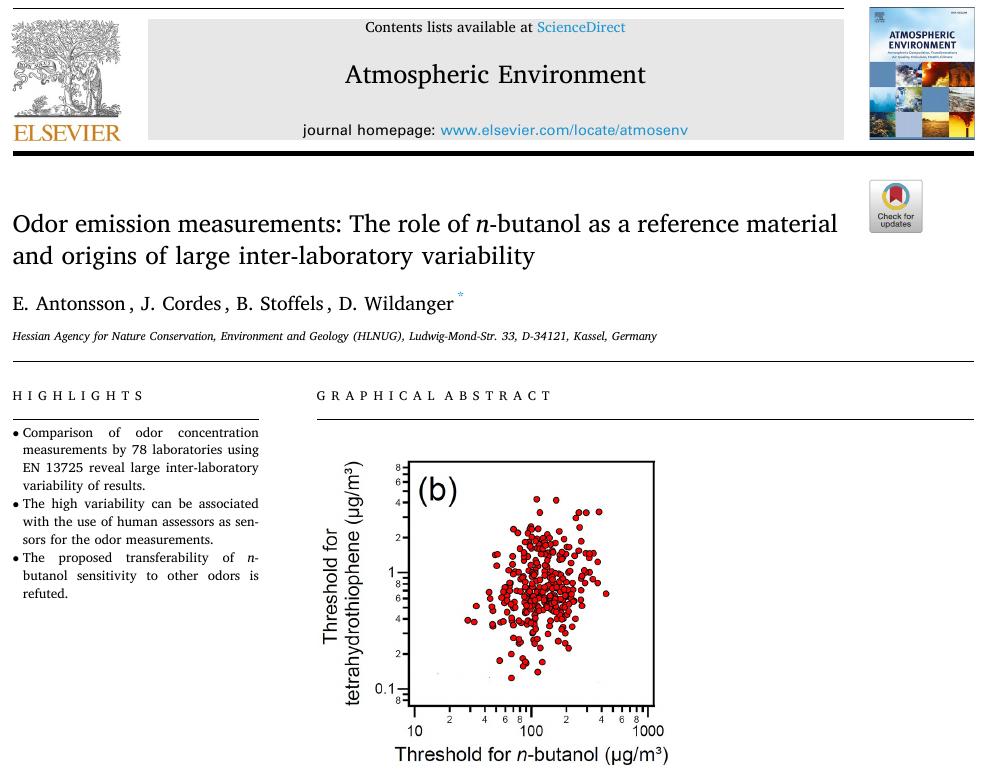
   In June this year, Mr Antonsson and his collaborators dropped a bombshell on the waterline of the standard governing dynamic olfactometry with the publication of their scientific paper published in Atmospheric Environment. The EN 13725 standard assumes that assessors' sensitivity to 1-butanol is transferable to other odours. However, the study reveals that this sensitivity transfer is not valid for other odorous substances, calling into question the uniform application of the standard.

   You may imagine how much debate this research has generated. We have participated in threads and threads of conversations with several world experts in odour management, commenting on the results of the following paper. The paper analyses the reproducibility of odour testing using the EN 13725 standard. The study focuses on the variability of results between different laboratories and how the selection of assessors and the number of repetitions influence that variability. These are some key findings of the paper.

Altri articoli …

All the content here under Creative Commons license