There is no translation available.
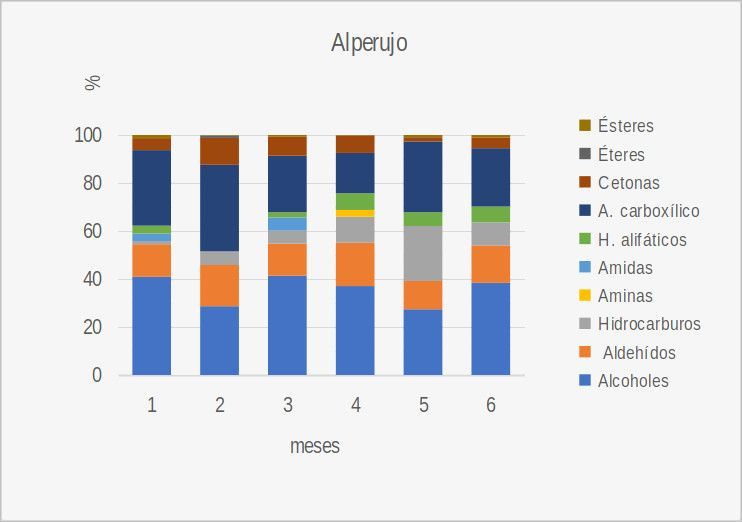 In the industrial production of olive oil, both solid wastes and those produced from their incineration are a serious environmental problem since only 20% w/w of the fruit becomes oil and the rest is waste, mainly orujo and alperujo.
A key aspect to transforming these wastes into an important source of energy such as pellets is to recognize the most appropriate time of the year for waste drying, with the objective of minimizing the environmental impact of the volatile compounds contained in the waste.
D. Hernández1,2,3, H. Quinteros-Lama2, C. Tenreiro2 , D. Gabriel3
1Instituto de Química de los Recursos Naturales, Universidad de Talca, Box 747, Talca, Chile
2Facultad de Ingeniería, Universidad de Talca. Merced 437, 3341717, Curicó, Chile
3GENOCOV Grupo de investigación. Departamento de Ingeniería Química, Biológica y Ambiental, Universidad autónoma de Barcelona, 08193, Bellaterra, España.
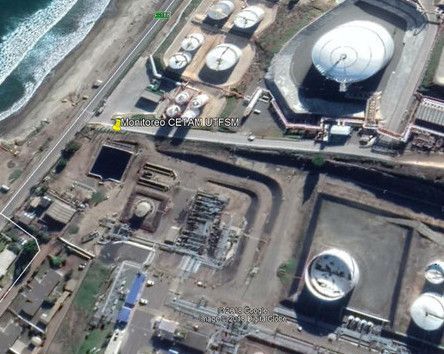 In Quintero Bay, an important industrial complex is located. Between August and September of 2018, air pollution events associated with odors occurred in the city of Quintero, resulting in intoxication of hundreds of people.
 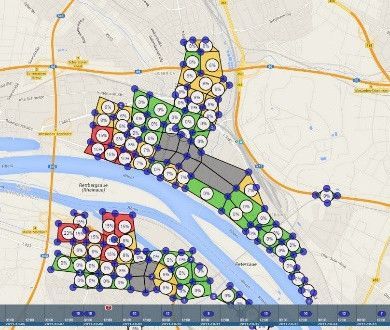 Environmental odour management today offers a variety of building blocks, ranging from the use of state-of-the-art technology to the implementation of various methods, which are based on national and international guidelines and standards. These range from odour monitoring approaches using trained human sensory panels and citizen science, real-time and forecasted dynamic dispersion modelling, trajectory and back-tracking calculations, but also sensor systems which are making use of gas sensors to detect and quantify key odorants of odour sources.