There is no translation available.
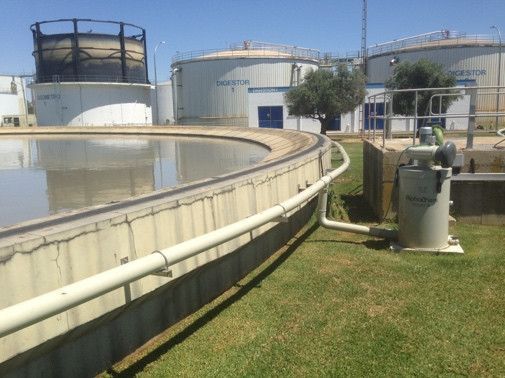 Deodorization of Waste Water Treatment Plants is becoming an increasingly important need to avoid conflicts with the neighboring environment. The primary and secondary clarifiers, due to their dimensions and concentrations of stinging gases, are units that, so far, have been quite abandoned, concerning deodorization.
The traditional solution is based on total coverage and deodorization of the indoor faul air, with a number of air renovations per hour between 3 to 8, depending on designs. This solution is expensive, both in terms of investment and maintenance. In the present article an alternative is shown, covering exclusively the channels of the clarifiers and deodorizing them with small units of chemical adsorption, obtaining an efficiency of approximately 90% with respect to the open decanter.
J. Balfagón*, J.L. Recaj
Alphachem S.L., Spain
 Once again, the German company Olfasense is behind the organization of the 2020 proficiency test for Dynamic Olfactometry according to the European Standard EN 13725. The registration period fo this test has started and organizers invite laboratories from different countries to participate in this ILC2020 test.
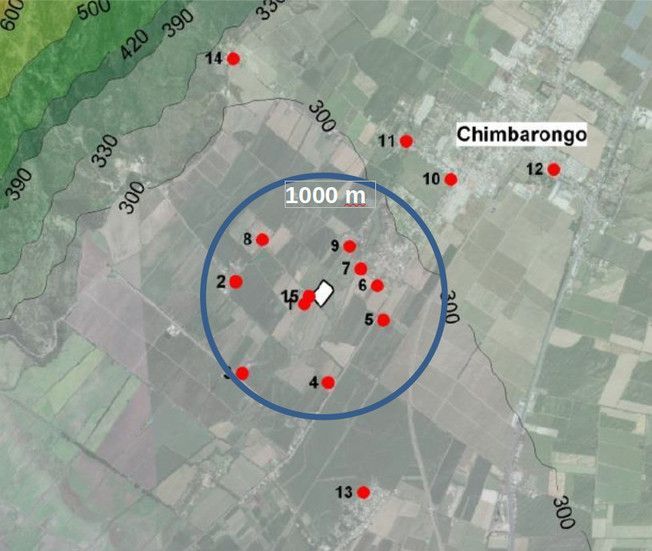 One way to assess odour nuisance is to apply a survey to the area of influence of an activity that potentially impacts the surrounding community. Repeated surveys were carried out in neighbours of the waste water treatment plant at Chimbarongo, Chile, during the years 2017 and 2018, using the VDI3883/1 model questionnaire.