There is no translation available.
 This Thursday, November 26th, at 15:00 (CET), the first workshop of the ASPIDI project (Automatic System Supported by the Population for the Identification of Diseases by Smelling Immunities) will take place. The aim of the first workshop is to present the research objectives, the experimental methods and the first activities in progress at the AQP Monopoli Waste Water Treatment Plant.
The ASPIDI project was born to give a response to the need of the Puglia Water Authority (as the representative body of all the municipalities belonging to the Optimal Territorial Area) to have systems for monitoring and controlling in real time the odour emissions derived from treatment plants, aims to develop a prototype of a trained electronic nose capable of detecting unpleasant odours and sending the report in real time to a database that will update a web-gis platform that is easily accessible to citizens.
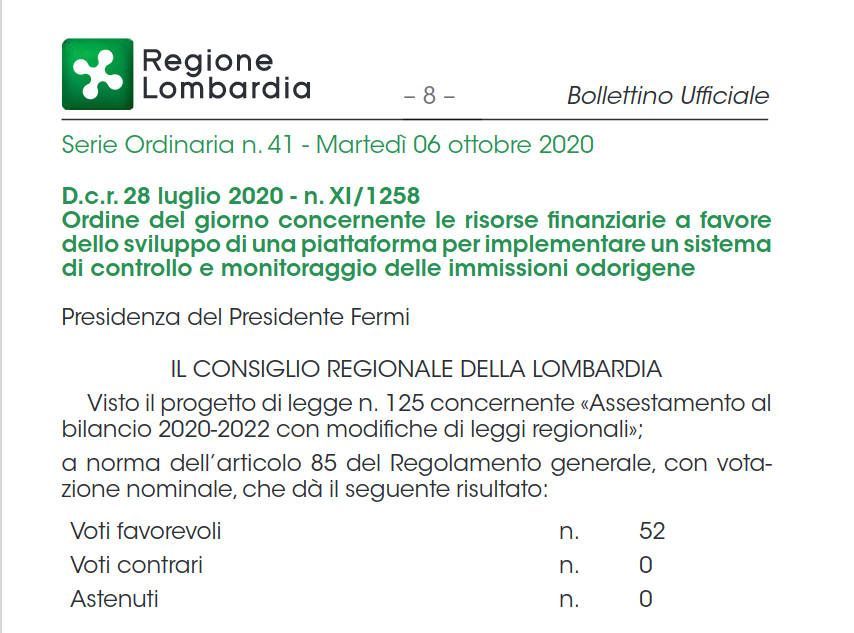 The Regional Council of Lombardy, Italy, published a D.C.R. (Deliberazione Consiglio Regionale) on the 28th of July 2020, for the funding of the development of a platform to implement a control and monitoring system for odorous inputs. The decision of the Regional Environmental Administration of Lombardia was taken after studying the results of the first successful project of mapping odours developed by the Italian Regional Environmental Administration of Marche.
 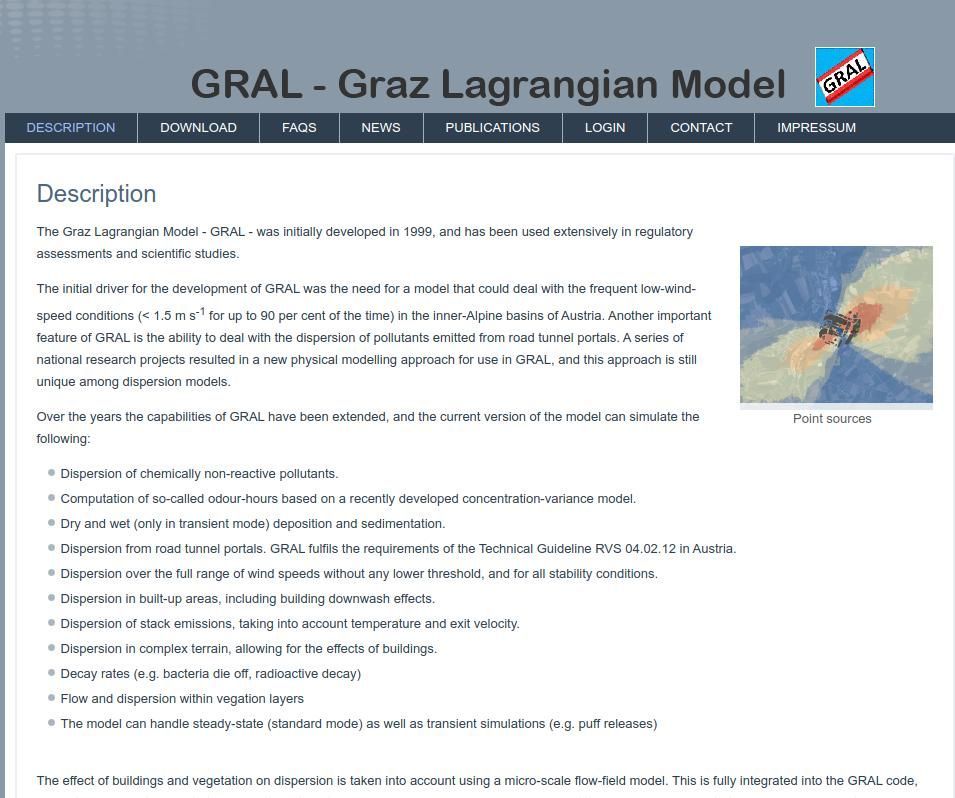 The Graz Lagrangian (GRAL) system is a Lagrangian particle model with a free Graphic User Interface (GUI) available in both Linux and Windows. Now the developers have released the