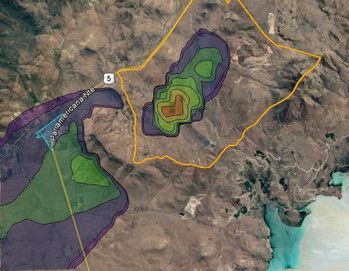
 The odor management associated with the operation of the El Rutal Biosolids Management Center has been carried out through different evaluation mechanisms such as: modeling of dispersion of gases and odors before and during the operation of the Center, continuous monitoring of odors, participation of the residents in the city center of Montenegro and Rungue.
The continuous analysis of the results delivered by the previously described mechanisms plus the consideration of atmospheric stability indicators (air quality and ventilation factor). allowed to determine episodes in which meteorological factors conditioned rises in the perception of odor concluding in the evaluation and modification of operational slogans in order to minimize the emission of odors.
F. Chávez, J. Garcés, A. Araya, P. Sanchez
Aguas Andinas S.A., área de Medio Ambiente y Biodiversidad, Santiago, Chile.
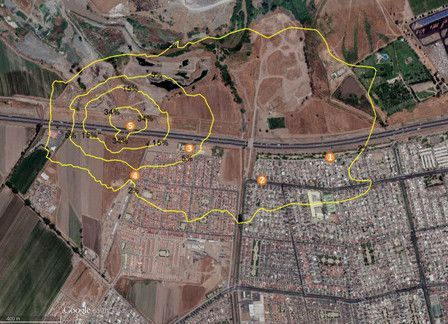 Approximately 50% of the wastewater from the "big Santiago" (Santiago Metropolitan Region, Chile) converges into the Chamber of Mixing and Distribution of Wastewater - CAM04 to be later conducted towards the Mapocho Trebal Sewage Treatment Plant.
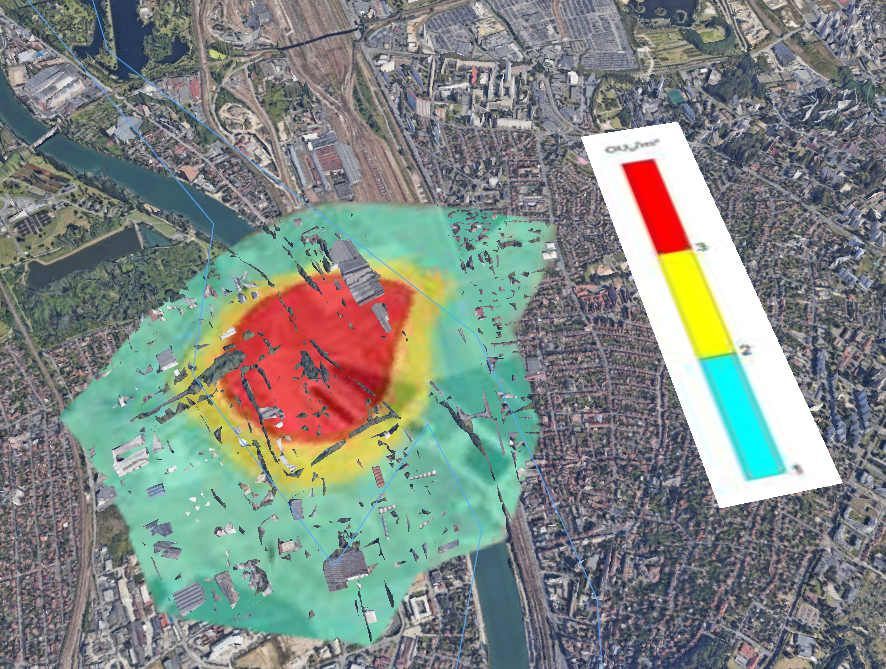 A new development on the first worldwide guideline on the assessment of odour exposure by using dispersion modelling will take its first steps. At this stage, there are many initiatives related to dispersion modelling worldwide but there is no specific guideline for odour modelling to our knowledge. This is an initiative promoted by several experts in the area of modelling that will be led by Mr. Günther Schauberger and Ms. Jennifer Barclay. First meeting will take place the 27th of August.