 In recent years, the community has taken an active role regarding situations or factors that affect its air quality and that of its daily life, especially in those areas close to industrial sites.
Because residential areas are expanding, until they reach them, the need arises in the industry for agile and dynamic tools to assess this type of risk early. In this context, modeling of atmospheric pollutants in real time emerges as a tool with the ability to quantify the concentration levels of pollutants in the receivers based on real-time meteorological records.
A. González, R. Guerra, V. Zorich
Envirometrika, Santiago (Chile)
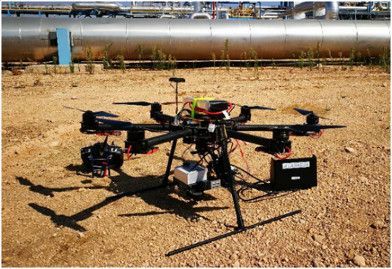 Fugitive emissions of biogas in the Urban Solid Waste Treatment Plants are an important source of odors. These emissions that occur, for example, in the landfills cells, even when these are degassed with drainage wells connected for the extraction, transport and storage of the gas for its energetic use, or for torch burning, they are very difficult to detect and require processes that require a lot of time and high execution costs.
 As you probably know, the International Environmental Society of Odour Managers (