 The 18th meeting of CEN/TC 264/WG 41 that is dealing with the new standard on Instrumental Odour Monitoring Systems (IOMS) took place last 28th of September. This was a short meeting to discuss some approaches for quality assurance and a call for volunteers to provide data to find out the best way to set a robust confidence interval for IOMSs.
After the last meeting discussions, it was clear that a plausibility check with real data was needed in order to test if the Chebyshev's inequality was appropriate as QAL1 procedure for IOMSs. Unfortunately, not enough data are available at this stage and no decision have been taken on this regard. The group is looking for more data on IOMS vs olfactometry tests to validate the statistical approach suggested, so anyone interested in contributing here may contact the task group leader to provide those data under a NDA.
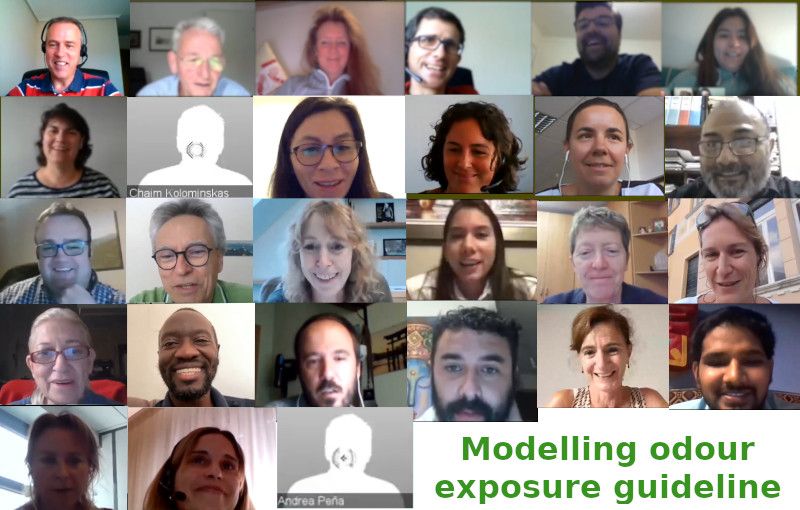 The 27th of August 2020 took place the kickoff meeting of the group dealing with the development of the first international guideline on the assessment of odour exposure by using dispersion modelling. To date, there are already 36 professionals from Belgium, Italy, France, Chile, Ecuador, Australia, Brazil, United Kingdom, Ireland, China, Spain, USA, India, Peru, Qatar and Austria participating in this initiative.
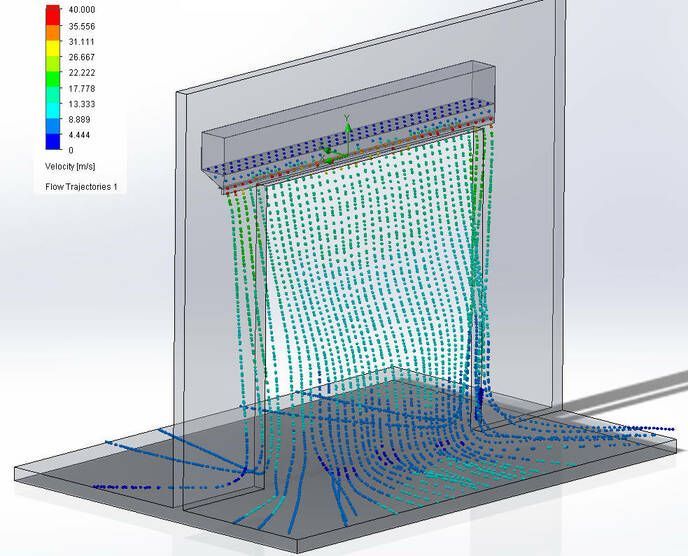 Air curtains are widely used across the industrial sector — for warehouse doors, ovens, continuous dryers, or for air sealing and climate control when a heating module is included. They also help contain odours within production areas and prevent the loss of clean, conditioned air. Air curtains are an effective solution for odour confinement in food processing plants or waste management facilities, where it is essential that odours remain contained within designated zones.