There is no translation available.
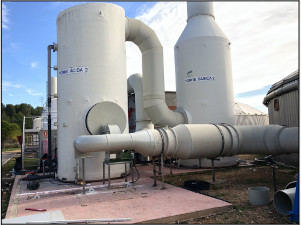 The wastewater treatment plant (WWTP) of Torredembarra, located in the province of Tarragona, Spain, has suffered for years from noticeable odor emission problems, mostly during the summer season. During past years, the odor treatment in the WWTP relied on a series of biological and physico-chemical systems, which led to significant operating costs and which had fluctuating efficiency, mostly during summer season.
In order to mitigate these odor emission events, a comprehensive restructuring plan was developed for this whole treatment system. The emission rates of the main odorous compounds in all the critical points of the WWTP were assessed during different times of the year. The most relevant odour emission areas were then confined, and the headspace air treated in a series of new and retrofitted biotrickling filters.
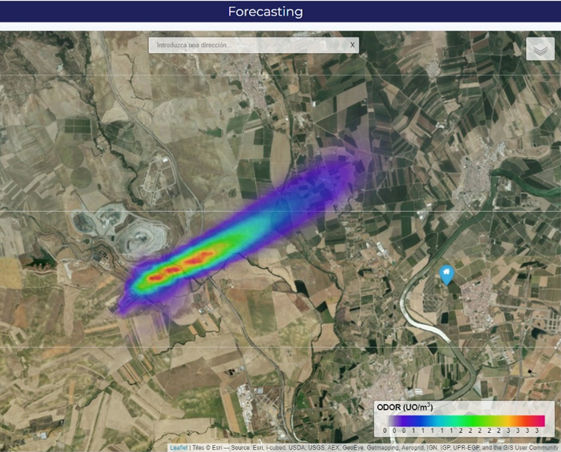 The proposed Advanced Biofiltration (mixed organic/inorganic) can be considered the Best Available Technology (BAT) to treat odorous emissions from MSW treatment plants, composting and WWTP plants among others, typically achieving final odour concentrations below 1000 uoE/m3 or 95% efficiency.
 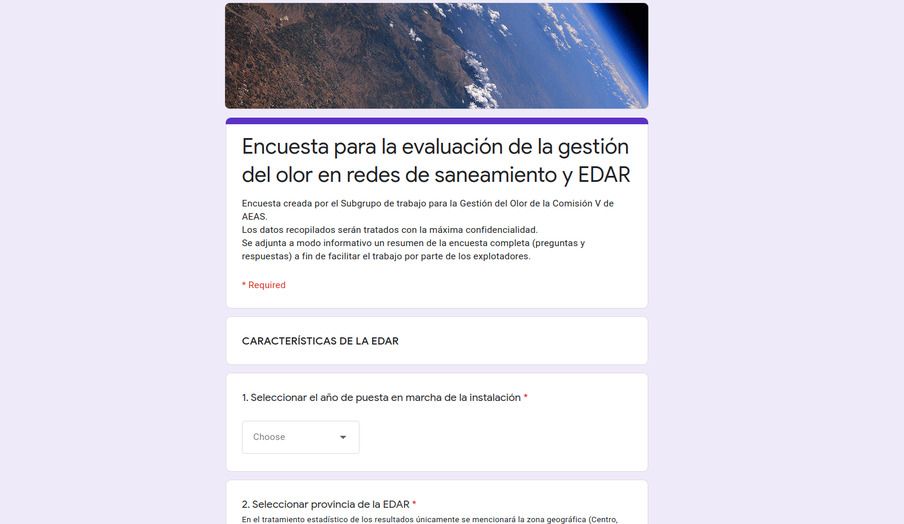 The Odour Working Group (OWG) of the Spanish Association of Water Supply and Sanitation (AEAS) will meet on 15th April to discuss the progress of its various working groups (WG). One of these WGs is working on a survey to assess the cost of odour management in sanitation systems serving more than 10,000 equivalent inhabitants in Spain.