The city of Cartagena de Indias, Colombia, made an enormous effort to clean up its water bodies by eliminating the discharge points in the city as well as the collection and treatment of 100% of the produced wastewater. However, these improvements brought unexpected consequences in the production of gases and the generation of offensive odors from the wastewater collection, treatment and final disposal system.

   This problem has forced Cartagena to define and develop a strategy that under a continuous improvement scheme has allowed diagnosing scenarios according to the particularities of the territory, evaluating alternatives, verifying the effectiveness of the interventions carried out from different fronts and, based on this, carrying out the pertinent adjustments focused on preventing, controlling and mitigating the generation and emission of offensive odors.
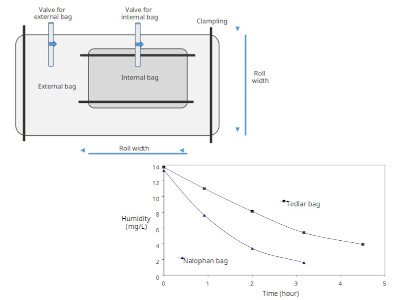
   Nalophan bags are commonly used for air sampling and especially for odour analysis. Even if olfactometric measurement must be carried out within maximum 30 hours after sampling, the question of potential sample evolution is always present. This study illustrates the behaviour of selected sulphur compounds in Nalophan bags from filling to analysis (over a period up to 100 hours).

   Select compounds were hydrogen sulphide, carbon disulphide, methyl mercaptan, ethyl mercaptan, dimethyl sulphide, diethyl sulphide and dimethyl disulphide and tested at high concentration level (in a range of 3900 to 1800 ppb each) to facilitate their direct and quick measurement by gas chromatography with flame photometric detector. The chemical analysis shows losses by adsorption and by diffusion depending on time and other conditions. Even if the variation seems limited during the first hours, the evolution shows that the need for a better film is real. 

    This work aims to describe the Italian pilot study carried out within the frame of the H2020 D-NOSES project and discuss the opportunity to integrate different approaches in order to deal with complex situations. The pilot study was carried out in the municipal area between Castellanza, Marnate, and Olgiate Olona, where an odour problem has been lamented for years.

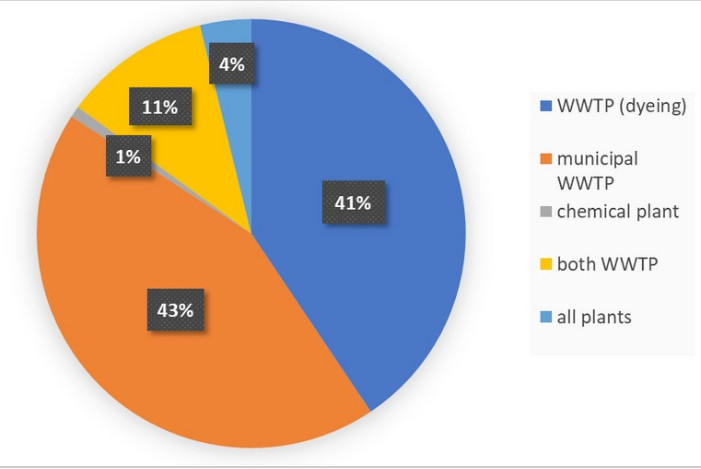
    As a first step of the project, 4 industries were identified as potential odour sources: a chemical plant, the municipal WWTP, a textile and dyeing industry, and the WWTP connected to the dyeing industry. In order to monitor the odour problem, it was proposed to combine the application of the D-NOSES methodology with the “traditional” way involving olfactometric measurements and dispersion modelling, the latter being the approach foreseen by the Regional guideline. The comparison of the citizens’ observations and the model outcomes allowed to verify the compatibility of the odour observations with the emissions from the two WWTPs.

More Articles …

All the content here under Creative Commons license