There are different strategies to carry out environmental odour impact studies, such as emission studies based on the European Standard EN 13725 or immission studies based on the German Standard VDI3940. By means of these methodologies, it is possible to determine the origin of the nuisance caused by an industrial facility (or group of facilities) in its surroundings.
J. M. Juárez-Galán, A. Amo, J.V. Martínez y I. Valor
Aqualogy Medio Ambiente, C/Dracma 16-18, Polígono Industrial Las Atalayas. 03114 Alicante. Jmanuel.juarez@labaqua.com.
Keywords: EN 13725, Olfactometry, odour abatement, cost reduction.
 Abstract
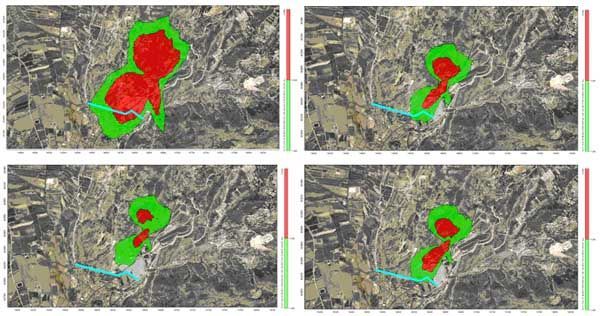
There are different strategies to carry out environmental odour impact studies, such as emission studies based on the European Standard EN 13725 or immission studies based on the German Standard VDI3940. By means of these methodologies, it is possible to determine the origin of the nuisance caused by an industrial facility (or group of facilities) in its surroundings. This diagnosis stage, allows to know the sources that are are truly responsible of the odour nuisance and therefore, to assess the most-effective corrective measures. Among these measures, there are several possibilities, from the increase of chimneys height to improve the dispersion conditions, to the implementation of an abatement system. Independently on the solution finally chosen, and considering the investment cost, the benefit for the company can be evaluated from two points of view. On one hand, there is a social benefit because the industrial activity is accepted by the social context since there is no negative impact. On the other hand, the information about the sources which are responsible of the odour nuisance allows to focus the economical investment to the operational units where it is required, saving money. In this paper, two case studies are presented. In both of them, due to the results obtained by an emission study based on EN 13725, several solutions have been proposed that have supposed important improvements when comparing them to the investments initially proposed without any odour study.
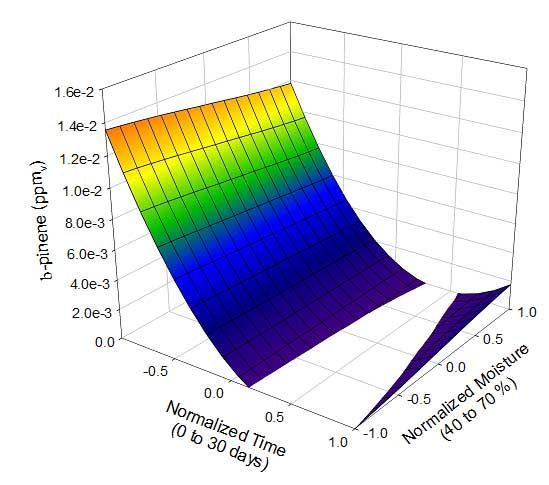 The relative statistical influence of control parameters, used in industrial composting of Municipal Solid Waste (MSW), such as aeration and moisture content on the amount and composition of the gases and odorous volatile organic compounds (COVs) generated in this process have been studied.