 R. López1, I. Cabeza1, J. R. Lock-Wah-Hoon1, I. Giráldez 2, M. Ruíz3, M. J. Díaz3
1 Instituto de Recursos Naturales y Agrobiología de Sevilla-CSIC, Avda. Reina Mercedes 10, 41012 Sevilla. rlnunez@irnase.csic.es.
2 Departamento de Química y Ciencia de los Materiales, Facultad de Ciencias Experimentales, Univ. de Huelva, Campus Universitario El Carmen, Avenida de las Fuerzas Armadas, 21071-Huelva.
3 Departamento de Ingeniería Química, Química Física y Química Orgánica, Facultad de Ciencias Experimentales, Univ. de Huelva, Campus Universitario El Carmen, Avenida de las Fuerzas Armadas, 21071-Huelva.
Keywords: Volatile organic compounds, terpenoid
Abstract
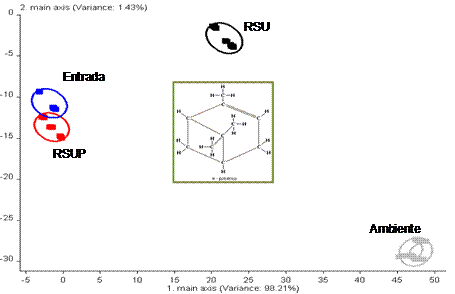
The volatile organic compound (VOC) α-pinene, one of the most abundant component emitted during the composting of urban waste (MSW) and pruning waste (P), was treated in biofilters filled up with a MSW compost or a MSW+P compost. A photoionization detector was used to carry out the monitoring of the biofilters efficiency but GC-MS and an electronic nose were also used for the process study. Moisture content in biofilters below 66% (dw, MSW) or 51% (dw, MSWP) made efficiency decrease to less than 90%. GC-MS spectra indicated no intermediate products from α-pinene degradation appeared but e-nose data indicates a “smell” corresponding to S-compounds produced in MSW biofilter. These results show that electronic noses could become a powerful tool for the monitoring of VOC compounds in biofiltering and composting processes.
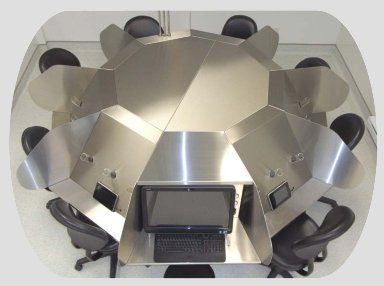
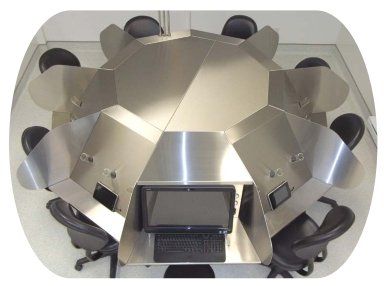 The market of olfactometers is rapidly growing and changing. As we saw in December, a new portable olfactometer named Scentroid SC302 came out and fresh from the bakery. That was a little and nice surprise for all of us and a shot for the olfactometer market dominated at this time by the German makers of the ECOMA TO8. This time, and just a few months after the show up of the Scentroid SC302, we have a new piece of engineering coming to the stage: The Onose-8 ® dynamic dilution olfactometer.