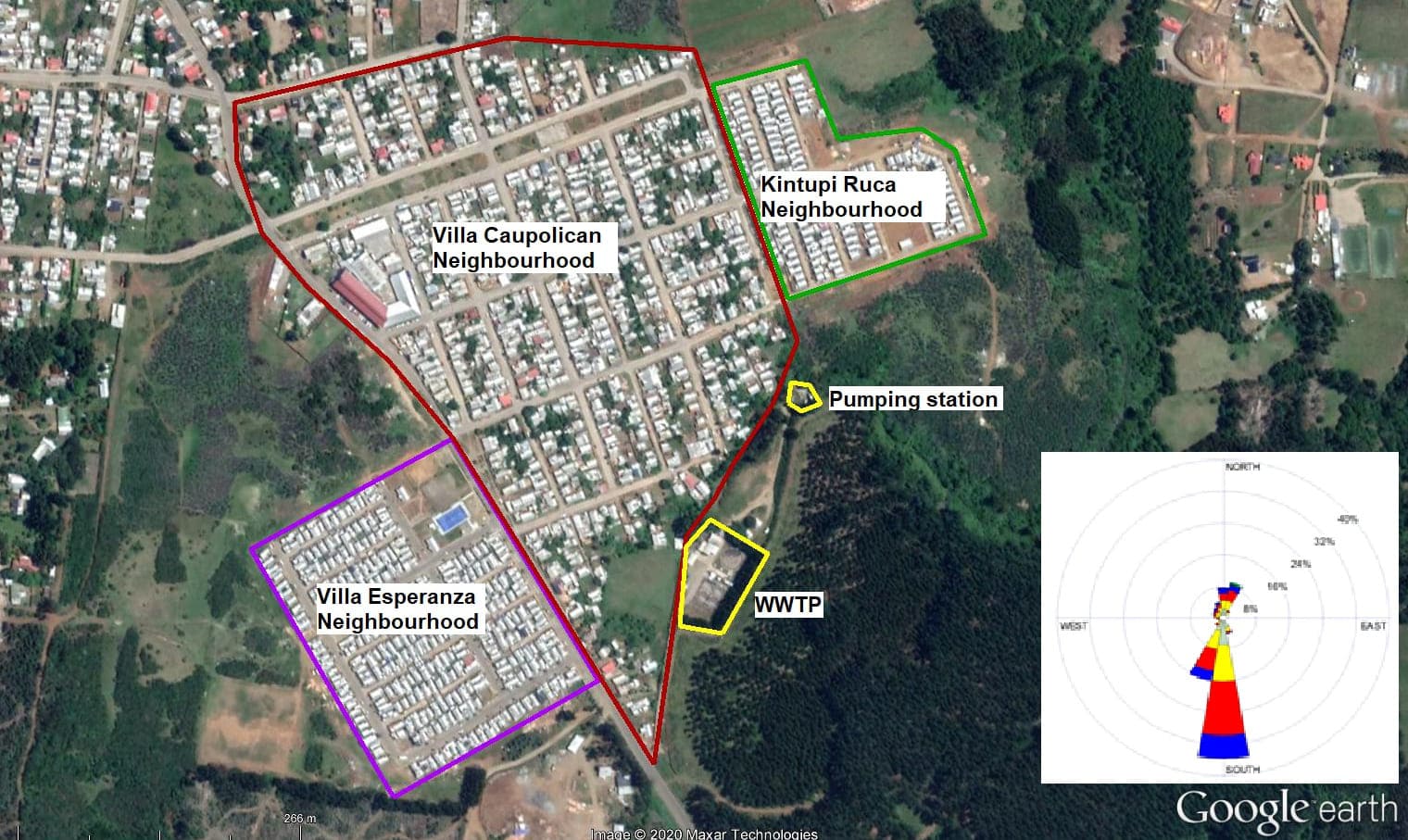
Increasing citizen demands for better environmental quality have led Chile, a party to the Escazu Agreement, to adopt participatory monitoring in environmental assessments, including for odour pollution.

   This work aims to compare the D-NOSES citizen-based odour data collection method with traditional assessment approaches. The study will evaluate the consistency of citizen-reported odour observations using an odour annoyance index. This assessment is crucial to validate the reliability of citizen-generated odour measurements.

N. Muñoz* & G. Schleenstein

Ecotec Ingeniería Ltda., José Victorino Lastarria 70 of. 213, Santiago de Chile
* nmunoz@ecotec-ingenieria.cl
   In Chile, offensive odors from industrial, agricultural, and urban sources have long affected quality of life, leading to new regulations after the emblematic 2012 Freirina case.

   This study tests the effectiveness of Ecosorb odor neutralizer in two Chilean companies by monitoring community complaints. Results suggest that using odor neutralizers can help any company reduce complaints and build better relationships with neighboring communities.

A. Hernandez* & V. Quintriqueo

Ecolife S.A.

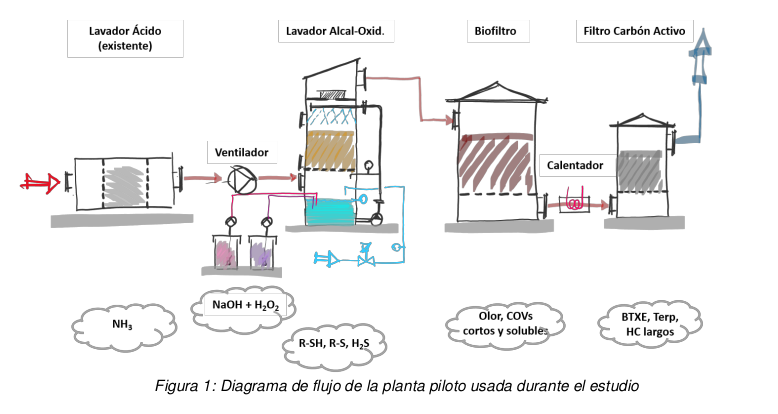
   This paper presents the results of a pilot study aimed at identifying the most effective odor and VOC treatment system for sludge thermal drying.

   The study evaluates the performance of various technologies in reducing odor, ammonia, and total organic carbon, providing key data on removal efficiencies and operational parameters. These findings help plant managers plan future treatment systems, minimize risks, and optimize costs while ensuring compliance with emission limits.

M. Fortuny* & R. Novak

Bionik Filtersysteme GmbH
* marc.fortuny@bionik.es

More Articles …

All the content here under Creative Commons license