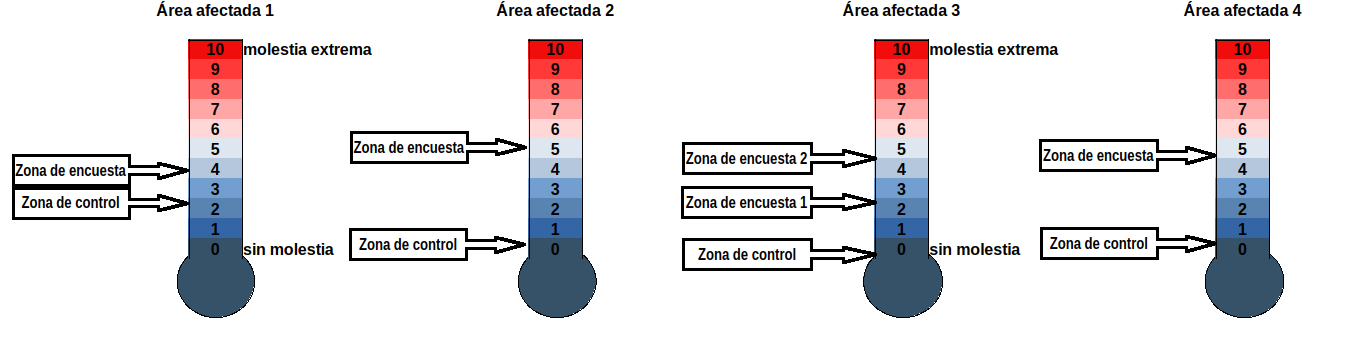
Chile’s first odour regulation for pig farming, enacted in 2023, prompted an evaluation of its social impact.

   A survey in four affected regions showed significantly higher annoyance levels than in control areas, with women reporting more behavioural adaptations. While no gender differences were statistically significant, the study highlights the need for larger samples and better implementation strategies. The methodology could also be applied to assess odour regulations in other industries.

G. Schleenstein1 y D. Caimanque2

1 Ecotec Ingeniería Ltda., José Victorino Lastarria 70 of. 213, Santiago de Chile
2 Ministerio del Medio Ambiente, San Martín 73, Santiago de Chile
* gs@ecotec-ingenieria.cl
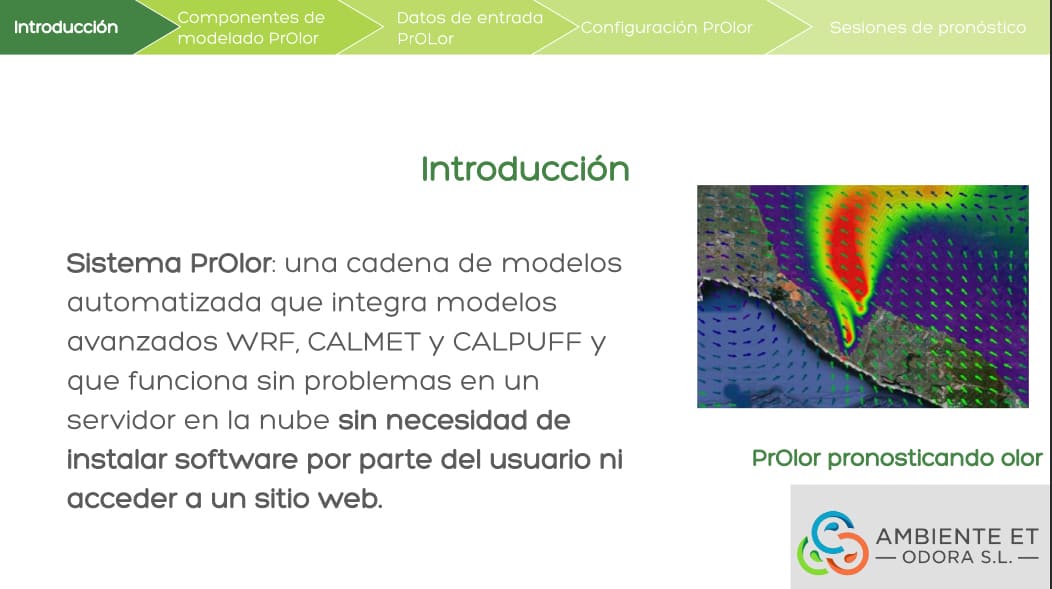
   PrOlor is a simple odor impact forecasting system for composting plants that supports BREF BAT 37 recommendations by anticipating odor episodes in sensitive areas.

   It uses meteorological and dispersion models (such as GFS, WRF, CALMET, and CALPUFF) run in the cloud to send daily odor threshold exceedance forecasts by email. The study also aims to compare these predictions with actual odor records at a specific composting plant.

C. Díaz1, C. Izquierdo1, A. Antón1, R. Bianconi2 & R. Bellasio2

1Ambiente et Odora. C/Uribitarte 6, planta baja. 48001, Bilbao, Bizkaia
1 carlosdiaz@ambienteetodora.com

2Enviroware. Via Dante Alighieri 142. 20863 Concorezzo (MB), Italy

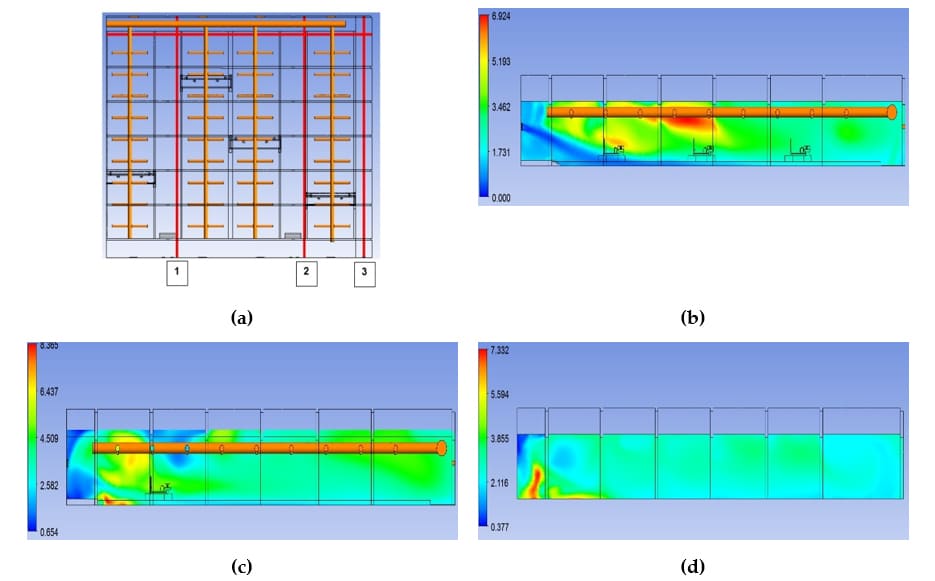
   This study evaluates a push-pull ventilation system with localized extraction designed to reduce H2S concentrations in the settling stage of a wastewater treatment plant in Santiago, Chile.

   CFD simulations and field measurements show that the existing crossed ventilation system results in H2S concentrations up to 21 mg/m³ over the water surface. The improved push-pull system effectively lowers H2S levels in the plant corridors to below 7.5 ppm, complying with Chilean regulations.

I. Polanco1, M. Rodríquez1, A. Hammad2, A. Haddad3, V. Tam4  & D. Vasco1

Department of Mechanical Engineering, University of Santiago de Chile, Santiago, Chile. ivan.polanco@usach.cl
Faculty of Built Environment, University of New South Wales, Sydney, Australia
Department of Civil Construction, Federal University of Rio de Janeiro, Rio de Janeiro, Brazil
School of Built Environment, Western Sydney University, Penrith, NSW, Australia

More Articles …

All the content here under Creative Commons license