The agro-industrial sector generates emissions of gases such as methane, ammonia, and hydrogen sulfide, which affect air quality and contribute to climate change.
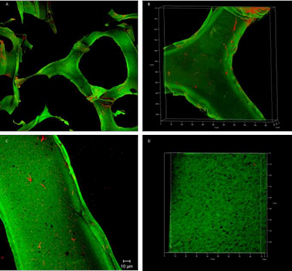
The Ubiproc® system employs biological filtration through microbial biofilms in closed organic waste pits, combined with real-time gas monitoring to optimize management. Field trials demonstrated maximum removal efficiencies of 87% for ammonia and 70% for hydrogen sulfide, with consistently stable average performance throughout the operational period.
D. Sepulveda, G. Villouta, C. Carrasco & V. Leon
Research and Development Department, Bioproc SpA., Concepción, Chile
Competing interests: The author has declared that no competing interests exist.
Academic editor: Carlos N. Díaz.
Content quality: This paper has been peer-reviewed by at least two reviewers. See scientific committee here.
Citation: D. Sepulveda, G. Villouta, C. Carrasco & V. Leon, 2025, Reduction of Pollutant Emissions in the Agri-Food Industry: Implementation of the Ubiproc® Biological Filtration System, OLORES25 Congress, Santiago, Chile, www.olores.org.
Copyright: 2025 Olores.org. Open Content Creative Commons licence. It is allowed to download, reuse, reprint, modify, distribute, and/or copy articles on Olores.org website, as long as the original authors and source are cited. No permission is required from the authors or the publishers.
ISBN: pending.
Keywords: Biofilter, Biofilms, Pollutant gases, Environmental monitoring, Sustainability
Abstract
The agricultural industry is a significant source of greenhouse gas emissions, including methane, ammonia, and hydrogen sulfide. These emissions contribute to global warming and negatively affect air quality and public health by forming fine particles in the atmosphere that impact both the environment and human health. To mitigate this problem, Bioproc has developed Ubiproc®, an innovative biological filtration system designed to treat contaminant and odorous gases. The system is installed in closed organic waste pits, where microorganisms forming biofilms biodegrade gases including ammonia, methane, and hydrogen sulfide. Ubiproc® also features a digital platform that monitors gas concentrations in real time, generating periodic environmental management reports. This allows users to maintain precise and continuous control of emissions, facilitating compliance with environmental regulations and improving the sustainability of their operations. In prototypes conducted in homogenization pits at a swine production facility (Maule Region, Chile), Ubiproc® has shown promising results. Maximum removal rates of 87% for ammonia and 70% for hydrogen sulfide were achieved, with average removal rates during operation of 60% and 50%, respectively. Thus, it offers a comprehensive, low environmental impact solution for the agricultural sector.
See the full article in other languages:
- French
- Spanish
- German
- Polish
- Arabic