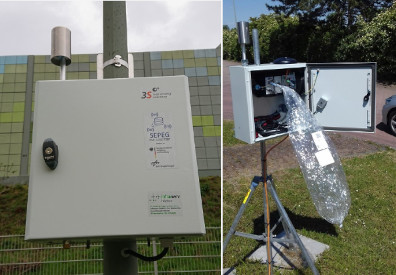
 Instrumental Odour Monitoring Systems (IOMS) represent the only tool available for environmental monitoring capable to perform real-time characterization of ambient air. They have been commonly used to assess odour impact at receptors thanks to their capability to detect odours and identify their provenance. An emerging application of IOMS concerns the real-time monitoring of emissions at plant fencelines. To do this, IOMS must provide a fast and accurate measurement of the odour concentration.
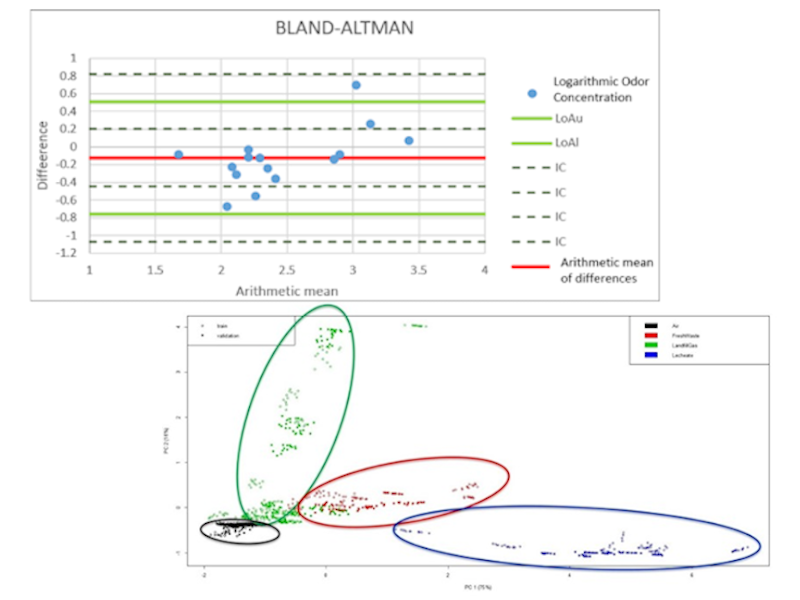
The most common approach, currently applied for odour quantification models, involves simplified regression algorithms, neglecting the classification of detected odours before quantification. This results in poorly accurate estimations of the odour concentration since IOMS responses to samples having the same odour concentration, but representative of different sources, may differ significantly.
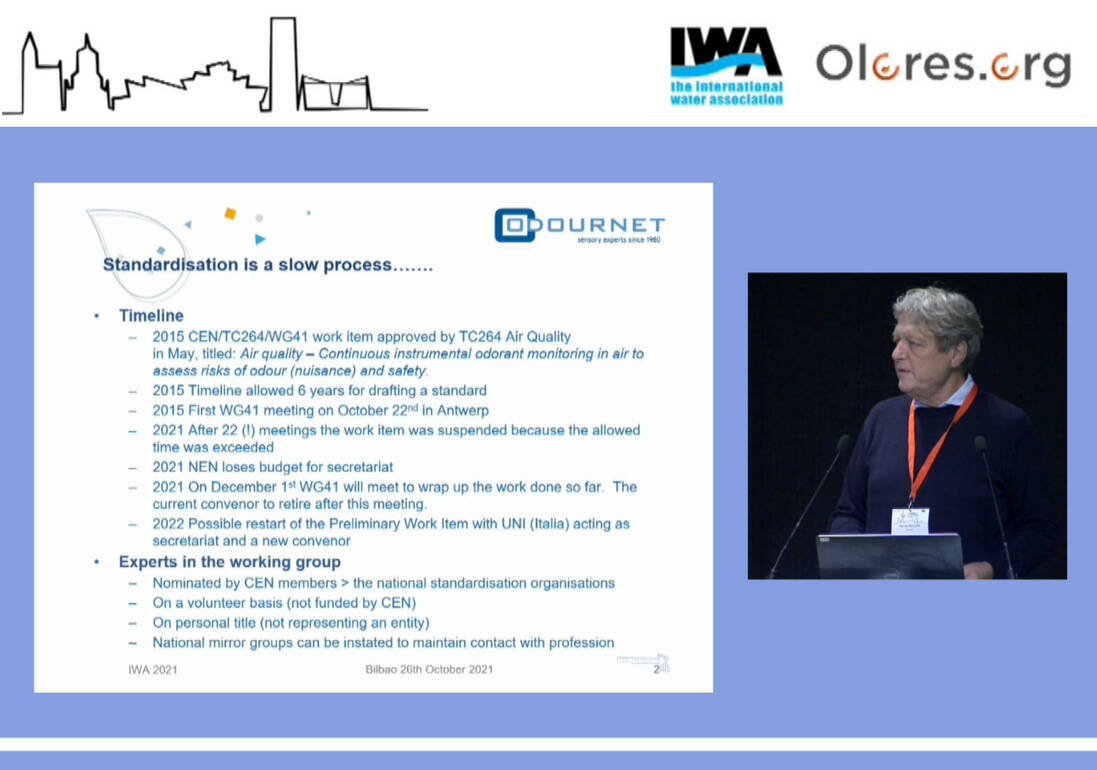 In May 2015 the decision was made, by a positive vote in Technical Committee 264 ‘Air Quality” of the Committee Européen de Normalisation (CEN), to establish a preliminary work item “Air quality – Continuous instrumental odorant monitoring in air to assess risks of odour (nuisance) and safety” which was entrusted to working group WG41 "Electronic sensors for odorant monitoring" for a period of 6 years starting on 2015-05-12. The Dutch member of CEN, NEN, was assigned the secretariat and the author of this article was appointed as convenor.