There is no translation available.
L. Vera1, E. Pagans, R. Domingues, A. Van Harreveld
Parc de Recerca UAB, Edificio EUREKA Espacio P2M2, 08193 Bellaterra. Tel: 935 929 048 Barcelona. 1 lvera@odournet.com (Luciano Vera)
Keywords: GC-TOFMS, odour, VOC, sensitivity, resolution
Abstract
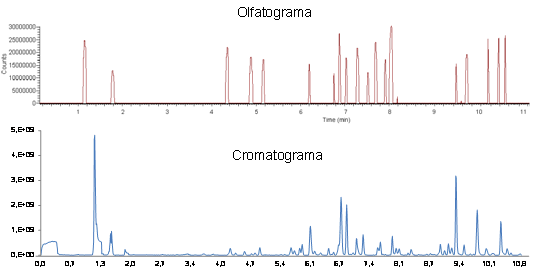 Knowing the chemical composition of an air sample is a complex challenge because the abundance of substances of different nature and different concentrations. This complexity increases if we want to identify those compounds that cause odors, since many of them are present at very low concentrations, hardly detectable by more conventional instrumental systems. Gas Chromatography (GC) coupled at Mass Spectrometry (MS) GC-MS, is undoubtedly the more robust and consolidated technique in air sample analysis. The more common types of GC-MS are Mass Spectrometers with single quadrupole detector. However, the continuous technological development of analytical instrumentation and especially in Mass Spectrometry allows ever more robust analyses, more sensitive and with improved resolution. In recent years, the interest in GC-TOFMS systems (TOF: time-of-flight) has been increasing, because it involves a faster detector with higher sensitivity and resolution compared to the conventional single quadrupole GC-MS. This paper compares a GCO-TOFMS system recently acquired by Odournet to a more conventional GC-MS quadropolemethod. Both used thermal desorption (TD) for the chemical and sensory analysis of air samples collected in the output of biofilters. The presented results show a clear difference in terms of sensitivity and resolution for GC-TOFMS compared to a conventional GC-MS identifying almost50% more compounds in the same air sample. Additionally an analysis using GCO (GC-sniffing) was performed, showing good complementarity with the results obtained by GC-TOFMS for the same sample.
 The SulfSCAN project presented in this article proposes a new approach to obtaining concentration maps by deploying a network of low cost olfactory sensors, and the development of atmospheric modeling tools to estimate the dispersion of odors in real time.
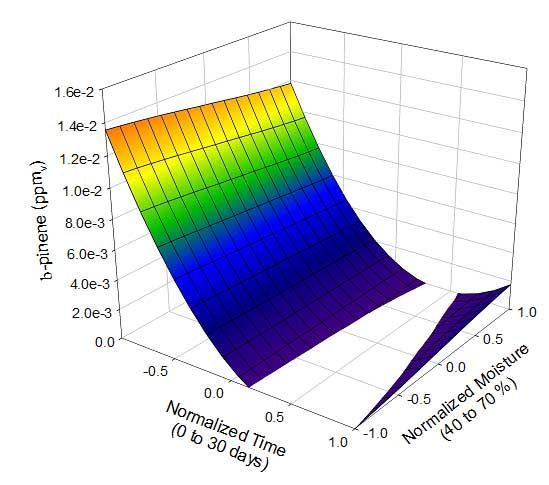 The relative statistical influence of control parameters, used in industrial composting of Municipal Solid Waste (MSW), such as aeration and moisture content on the amount and composition of the gases and odorous volatile organic compounds (COVs) generated in this process have been studied.