There is no translation available.
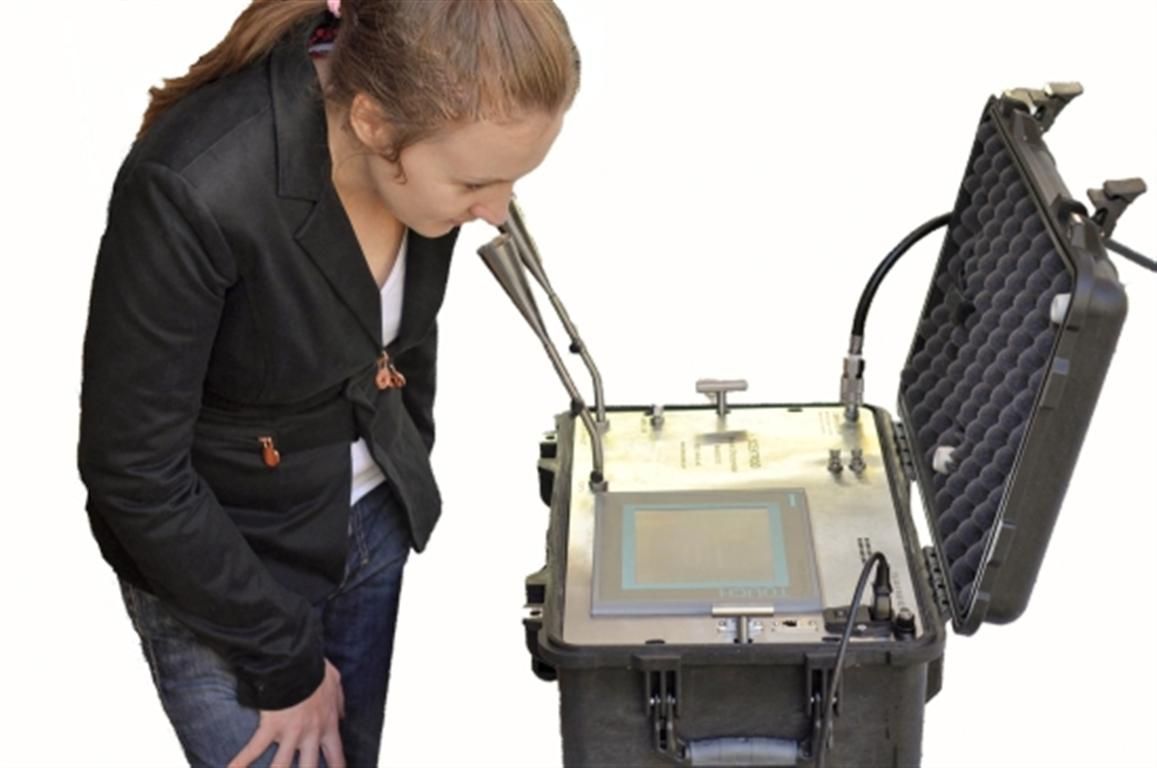
Scentroid SC302   A new single-port mobile olfactometer that meets all international standards such EN 13725 and ASTM E679-4 has come into the market.  This device may be a very serious competitor for a well known German dynamic olfactometer.

   This fully automated PLC controlled olfactometer uses mass flow controllers as his direct competitor, however the main advantage of this device is that it comes with a Siemens PLC and touch-screen interface, transforming this sofisticated device into a very simple and easy to use equipment. No need for a laptop to control this olfactometer.
There is no translation available.

Ton at the Nose in Rome  This introductory paper was presented at the Nose2008 conference. Later Ton commented me that he got contacted by the Italian Association of Chemical Engineering (AIDIC)  with a very short notice, so he had not much time left to prepare the paper.

Nonetheless, that morning, when the audience was hearing that speech about the history of a professional life and its relation with odours, it had the sense of being part of a very long history. A nice slice of this history belongs to Mr. Van Harreveld.

As we were hearing this speech, we realised that we were getting involved by the history of olfactometry itself, and as a part of it, we got inspired with this narration… At least I did!. So anyway, we enjoyed the rest of the day with other interesting papers on a very well organized conference. Meanwhile I made a note in my mind about reading the paper again.

I got to speak with Ton again later in Barcelona for the IWA meeting and I asked him for permission to publish this paper, not included, I guess due to its late birth, in the papers published by the organizers of the Nose2008. The permission was granted and here you have the paper.

 Now you can read it and enjoy it.

There is no translation available.

  When measuring odours, 2 different methods can be used depending on the characteristics of the Odours (1).

  •   Physicochemical Methods: Gas Chromatography, FID, piezoelectric sensors (electronic noses), colorimetric tubes, etc.
  •   Sensory methods: Olfactometry, Nasal Ranger, psychometric assessment, etc.

  The physical-chemical methods are suitable when the Odorous compound is known or when we pretend to monitor the emissions of certain installations in continuum to control the presence of gas leakages associated with odorous compounds. This methods are not very specific or sensitive nowadays.

  Although it is a relatively new technique, Olfactometry is presented as the future standard to measure odours until other devices, such as the electronic nose, are further developed.

Plus d'articles...

All the content here under Creative Commons license