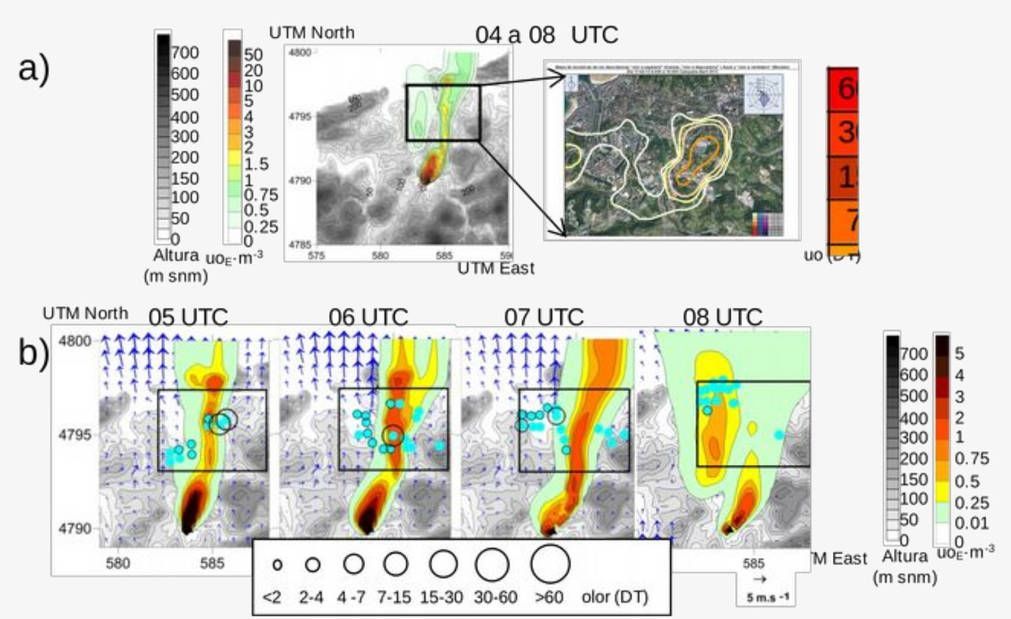
 The RAMS-CALMET-CALPUFF modelling system has been used to simulate the odorous impacts from a paper-mill in an urban area located several kilometres away in a coastal mountainous area.
Over the last years, episodes of citizens complaints due to malodours have been registered, with a potential origin in several pollution sources located inside and outside the city. A selection of episodes under anticyclonic conditions, with poor ventilation in general and continuous changes of stability and wind during the day, has been simulated.
V. Valdenebro1*, E. Sáez de Cámara1, G. Gangoiti1, L. Alonso1, J. A. García1, M. Navazo2, M. de Blas1, J. Lavín3, N. García-Borreguero
1Universidad del País Vasco UPV/EHU, Escuela de Ingeniería de Bilbao, Alameda de Urquijo s/n, 48 013 Bilbao, España.
2Universidad del País Vasco UPV/EHU, Escuela Universitaria de Ingeniería de Vitoria-Gasteiz, C/ Nieves Cano 12, 01006 Vitoria-Gasteiz, España.
3 Sociedad Española de Abastecimientos, S.A., Gran Vía Marqués del Turia,¸19, 46005, Valencia, España.
4Gobierno Vasco, Departamento de Medio Ambiente y Política Territorial, Dirección de Administración Ambiental, Servicio de aire, Donostia-San Sebastián 1, 01010 Vitoria-Gasteiz, España.
* veronica.valdenebro@ehu.eus
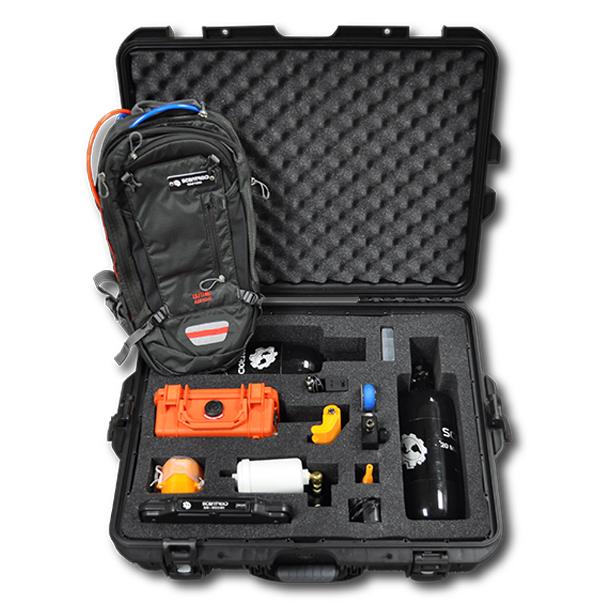 The SM100i uses fixed orifice dilution control and therefore requires minimal re-calibration. However standard, annual re calibration should be performed. As a new service for their clients, the company
  The aim of this work is to present a system to monitor odour incidents to detect odour sources in industrial areas that can cause an odour impact in residential neighbourhoods.