 The website of the Support Center for Regulatory Atmospheric Modeling (SCRAM) no longer includes the CALPUFF model as a recommended dispersion model. This means that one of the most widely dispersion model used for odour modelling is not recommended by the US EPA any more. This decision has serious consequences for the odour community.
The U.S. Environmental Protection Agency (US EPA) originally published the Guideline on Air Quality Models in 1978. Since then, a few revisions of the Guideline have been carried out. In 2003, this Guideline was modified to include CALPUFF as one of the preferred model. This model was removed from the "preferred list" in May, 22 2017 (and now from the website). allegedly due to concerns about its capabilities to deal with long-range transportation of pollutants. This is no argument to exclude this model from the recommended list, as it is widely used for other purposes, different from long-range transportation. For example, when dealing with the calculation of the odour impact of a facility.
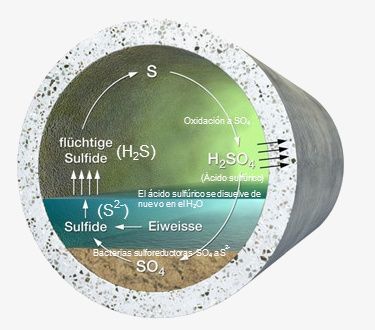 Sewervac new mathematical modeling tool for the sulfur ion allows to model the routes of the sulfide ion to identify at which points we will have the highest sulfide’s concentrations and consequently hydrogen sulphide (H2S), the conversion rates of sulfur to hydrogen sulphide, the origin of the hydrogen sulphide peaks and what it can be done to avoid it.
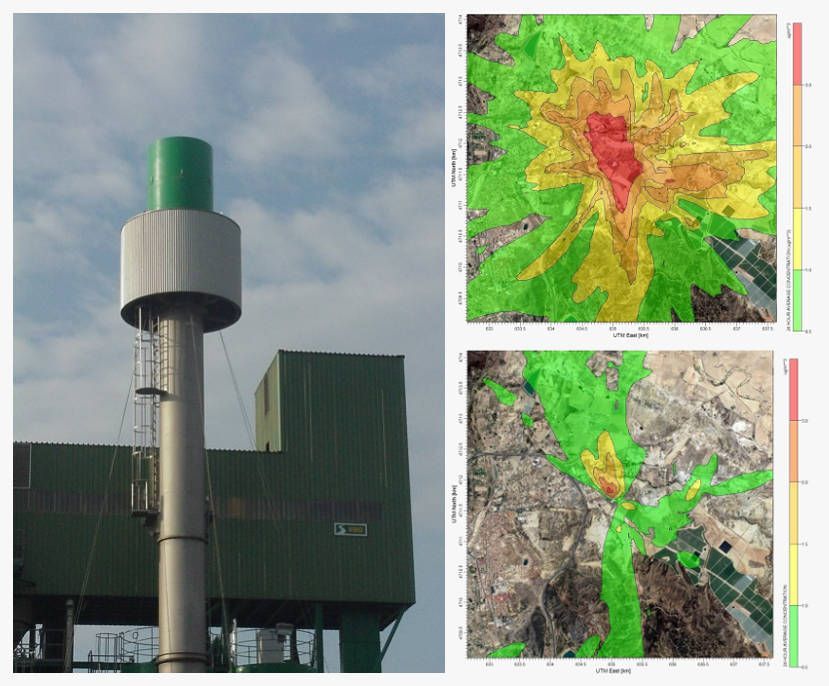 For the industrial sector, in many occasions it is the directed sources that are the main route of emission of pollutants into the atmosphere. In these cases, the technical recommendations for minimizing the impact of industrial emissions on the environment indicate the chanelling of these emissions for dispersion at some height as a first step towards establishing possible corrective measures.