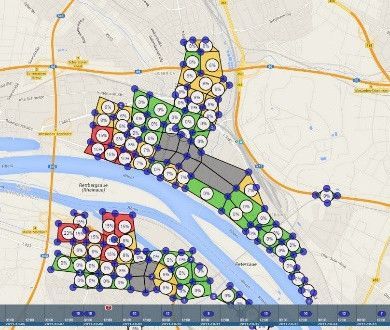
 Der Umgang mit Umweltgerüchen bietet heutzutage eine ganze Reihe von Bausteinen, von der Anwendung von Verfahren nach dem Stand der Technik bis zur Anwendung methodischer Varianten auf der Basis von nationalen und internationalen Richtlinien und Normen. Sie reichen von Ansätzen zur Geruchsüberwachung mit geübten Prüferkollektiven und Bürgerwissenschaft, mit dynamischen Ausbreitungsmodellen in Echtzeit oder als Prognose, Bahnberechnungen und Rückrechnungen, aber auch mit Sensorsystemen, die Gassensoren einsetzen, um Schlüsselreize aus Geruchsstoffquellen zu identifizieren und zu quantifizieren.
Obwohl all diese Verfahren und Methoden dazu beitragen können, das Verständnis für die möglichen Ursachen von Problemen durch Gerüche zu mehren, ermöglichen die meisten Lösungen auf dem Markt nur eine isolierte Betrachtung der gewonnenen Daten. Je nach dem spezifischen Szenario und den damit verbundenen Fragestellungen ist oft die richtige Kombination dieser Bausteine der Schlüssel, um endgültige Klarheit über Zusammenhänge von Geruchsstoffemission und/oder -immission zu bekommen. Eine flexible Plattform wie Ortelium ermöglicht es, Datenkanäle zu verknüpfen, so dass sich ein aussagefähigeres Bild von der Geruchssituation ergibt.
C. Mannebeck*, M. Andresen
Olfasense GmbH, Fraunhoferstr. 13, 24118 Kiel, Germany,
*cmannebeck@olfasense.com
 CALPUFF Version 7.3.1 has been released. This version incorporates an agricultural spraying source type. In addition, several bugs were identified and fixed in Version 7.2.1 including issues with the use of multiple sub-hourly variable emissions files and processing missing layers in AERMET generated .PFL files. This model is out of the list of recommended models of the US EPA but it is the most appropriate under low wind/calm conditions that influence odour impact and with complex terrains.
 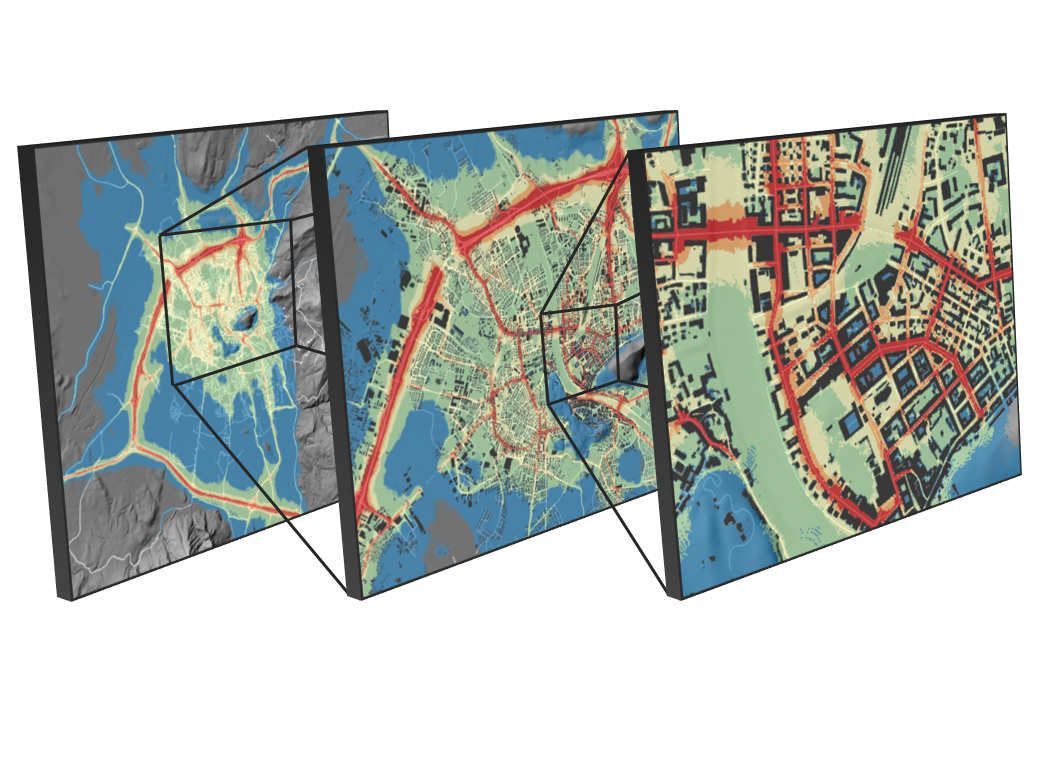 The Graz Lagrangian (GRAL) system is a closed-source Lagrangian particle model with a free Graphic User Interface (GUI) available in both Linux and Windows. This model has a special module focused on odour dispersion modelling and now, a new beta release has been distributed in the mail list of users, with an extensive list of changes.